
Thermostatic Shower Mixer vs Manual: Which Should You Specify?
Specifying a shower for a hotel, a rental apartment or a family bathroom usually comes down to one decision: a thermostatic shower mixer or a manual one. The price difference is easy to see on a quotation. What is harder to see is where that money goes, and which projects actually need it. This guide compares both types on temperature stability, scald protection, pressure requirements, maintenance and total cost — the points that decide a specification in practice.
The 30-second answer
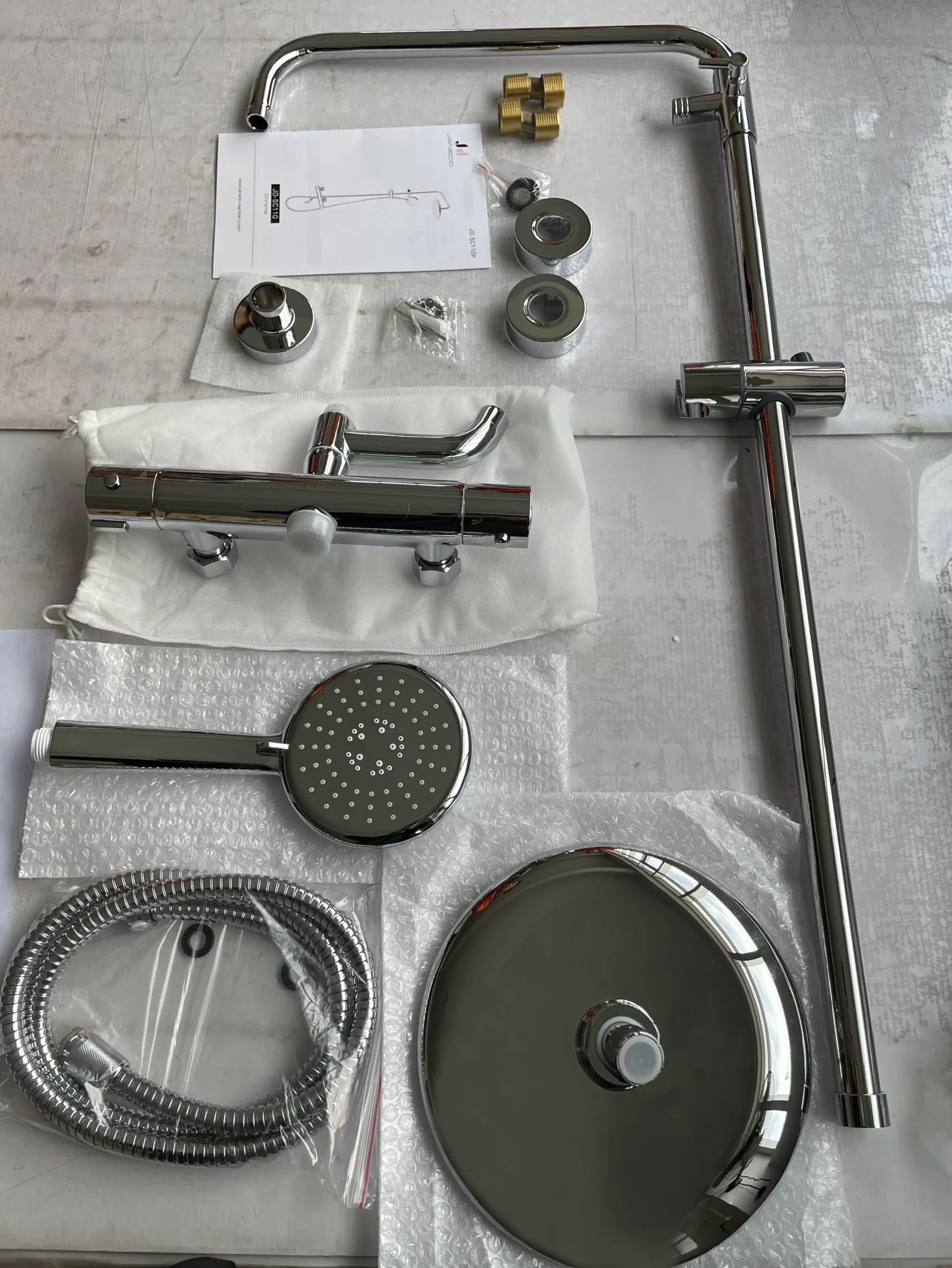
A manual mixer is cheaper, simpler and tolerant of poor water pressure. A thermostatic mixer holds the outlet temperature within a degree or two even when someone opens a tap elsewhere, which is why it is the default for hotels, care homes and family bathrooms. If the project has children, elderly users or shared hot water, specify thermostatic.
What Is a Thermostatic Shower Mixer?
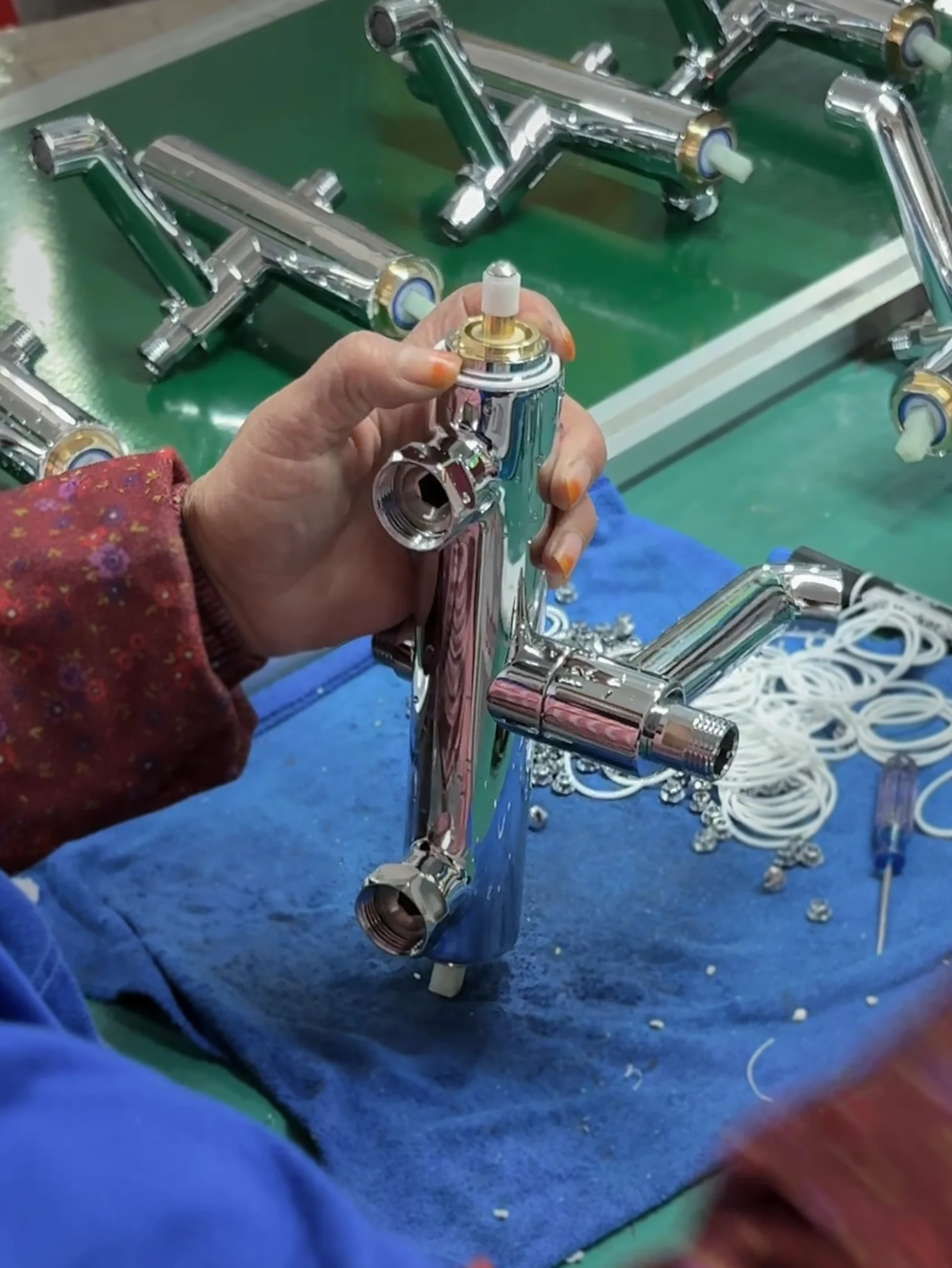
A thermostatic mixer contains a temperature-sensing element — usually a wax capsule — that expands and contracts as the mixed water temperature changes. When the element moves, it adjusts the ratio of hot to cold water automatically. The user sets a temperature once, and the mixer holds it.
Two consequences follow. First, the outlet temperature stays stable when pressure fluctuates elsewhere in the building, which is the actual cause of most "the shower went cold" complaints. Second, the mixer can be fitted with a safety stop at around 38°C, so the handle cannot be pushed into scalding water by accident — a requirement in many public and healthcare specifications.
How a Manual Shower Mixer Works
A manual mixer uses a ceramic disc cartridge. The handle moves two discs against each other to blend hot and cold; the position of the handle determines the temperature. There is no sensing element and no memory — every user adjusts the temperature from scratch, and any pressure change in the building shifts the outlet temperature with it.
That simplicity is also its strength. Fewer moving parts, no wax element to scale up, and a cartridge that can be swapped in minutes. For a rental flat or a price-led project, it is often the rational choice.
Thermostatic Shower Mixer vs Manual: Side-by-Side
| Criterion | Manual mixer | Thermostatic mixer |
|---|---|---|
| Temperature stability | Shifts with pressure changes | Held within roughly 1–2°C |
| Scald protection | None by design | 38°C safety stop available |
| Minimum pressure | Works from very low pressure | Typically 0.5–1.0 bar dynamic |
| Hot/cold balance | Tolerates unbalanced supply | Needs balanced supply |
| Maintenance | Ceramic cartridge replacement | Element cleaning, filters, cartridge |
| Hard water sensitivity | Moderate | Higher — scale affects the element |
| Unit cost | Lower | Typically 30–60% higher |
| Best fit | Rental, budget, low pressure | Hotel, healthcare, family bathroom |
Where a Thermostatic Mixer Earns Its Price
- Shared hot water systems. When another tap opens, a manual mixer drops or spikes in temperature. A thermostatic element corrects within a second or two.
- Vulnerable users. Children, elderly residents and anyone with reduced mobility cannot react quickly to a temperature spike. The 38°C stop is the difference between a complaint and an incident report.
- Hospitality. Guests judge a hotel bathroom by whether the shower behaves. Repeat temperature complaints are expensive to handle remotely.
- Water and energy. Because the temperature does not need constant correction, thermostatic mixers tend to waste less hot water during adjustment.
- Compliance. Many public and healthcare specifications require thermostatic control by name, which makes the choice for you.
Where a Manual Mixer Is Still the Right Choice
- Low-pressure systems. Gravity-fed or poorly pumped supplies may not reach the minimum dynamic pressure a thermostatic cartridge needs.
- Unbalanced supply. If hot and cold pressures differ significantly and cannot be corrected, a manual mixer behaves more predictably.
- Price-led volume projects. On a 500-unit order, the unit-cost difference is material, and the specification may not call for thermostatic control.
- Simple servicing. A caretaker can change a ceramic cartridge without diagnosing a wax element.
Specification trap
A thermostatic shower mixer installed on an unbalanced or low-pressure supply will underperform — and the failure will look like a product fault. Check the dynamic pressure at the outlet before the order is placed, not after installation.
Pressure, Flow and Hot Water Supply
Three conditions decide whether a thermostatic mixer works as intended:
| Condition | Typical requirement |
|---|---|
| Dynamic pressure | 0.5–1.0 bar minimum, depending on the model |
| Pressure balance | Hot and cold within roughly 0.5 bar of each other |
| Hot water temperature | Ideally 55–65°C at the inlet so the element has range to work with |
| Flow rate | Must suit the shower head, not just the mixer body |
Combi boilers and instant heaters are a common source of problems: they modulate flow and temperature, which fights a thermostatic element that expects a stable hot supply. If the project uses a combi, confirm the specific cartridge behaviour with the factory before specifying.
Standards and Approvals to Ask For
The standards differ by type, and mixing them up is a frequent sourcing mistake:
- EN 1111 — thermostatic mixing valves for high-pressure systems.
- EN 1287 — thermostatic mixing valves for low-pressure systems.
- EN 817 — mechanical (manual) mixing valves, high pressure.
- EN 1286 — mechanical mixing valves, low pressure.
- TMV2 / TMV3 — UK certification schemes for thermostatic valves, commonly requested in healthcare and social housing. Confirm the exact model and report rather than assuming a range is covered.
- WRAS, ACS, DVGW, CE — market-specific material and water-contact approvals.
For a European tender, the practical question is not "does the factory have certificates" but "does this specific model have the certificate for this specific market". Ask for the certificate number and the model list attached to it.
Maintenance, Spare Parts and Warranty
A thermostatic cartridge is a wear item. In hard-water areas, scale builds on the element and the response slows; inlet filters clog and the mixer becomes sluggish. Plan for filter cleaning at every service visit and cartridge replacement on a defined cycle rather than waiting for failure.
Spare parts availability is the real differentiator between suppliers. A hotel with 200 rooms needs cartridges, handles and seals available for years after installation. Ask for the spare-part list and the guaranteed availability period in writing — this matters more than a one-year warranty on the body.
How Janedo Builds Both Types
Janedo has manufactured sanitary ware since 1997, with more than 25 years of export experience across 130+ product series and 1,200+ faucet and accessory models. Machining, polishing and assembly run in an 18,000 m² plant, with mould development and casting in a second 8,800 m² facility; monthly capacity is 300,000 faucets.
Production is managed through ERP and TPS, and the quality system is certified to ISO 9001, ISO 14001 and OHSAS 18001, with BSCI, Sedex and CNAS recognition. Product approvals include ACS, DVGW, WRAS, CE, GOST and WaterMark, which covers the usual European entry points for both manual and thermostatic ranges. You can see the current faucet and mixer tap range for available bodies and finishes.
If you need to understand what sits behind the handle before comparing suppliers, our guide to what's inside a mixer tap breaks down the cartridge, body and aerator.
Frequently Asked Questions
Is a thermostatic shower mixer worth it?
For hotels, care homes and family bathrooms, usually yes. The stable temperature and 38°C safety stop prevent the most common shower complaints and reduce scald risk. For a low-pressure rental property, a manual mixer is often the better fit.
What water pressure does a thermostatic shower mixer need?
Most models need 0.5–1.0 bar dynamic pressure with hot and cold supplies balanced within about 0.5 bar. Low-pressure variants exist for gravity-fed systems, but they must be specified as such.
Can a thermostatic mixer fail and scald someone?
Failure usually shows up as a loss of temperature control rather than a sudden scald, because the safety stop limits handle travel. Regular servicing and filter cleaning are the main safeguards.
How long does a thermostatic cartridge last?
Service life depends on water hardness and use. In hard-water areas, expect to clean filters annually and replace the cartridge on a planned cycle rather than waiting for it to seize.
Can I replace a manual mixer with a thermostatic one?
Often yes, if the body and pipe centres match and the supply pressure meets the thermostatic requirement. Check the dynamic pressure first — swapping the cartridge is not enough on an underpowered system.
Are thermostatic mixers more expensive to maintain?
The cartridge costs more than a ceramic disc cartridge, but the maintenance interval is predictable. The decisive factor is spare-part availability, so confirm it before ordering a project quantity.
Next step
Send us the project type, supply pressure and target market, and we will confirm whether a thermostatic or manual configuration — and which approval route — fits your specification.
Reference: Thermostatic mixing valve — Wikipedia and WRAS — Water Regulations Advisory Scheme.


