
Faucet Anatomy: What's Inside a Mixer Tap? Complete Parts Guide
Understanding faucet anatomy helps you choose better products, explain value to customers, and make informed sourcing decisions. Here's every component that makes a mixer faucet work — from the ceramic cartridge to the aerator.
Main Components of a Mixer Faucet
Every mixer tap — whether it's a basin faucet, kitchen mixer, or bathtub shower mixer — shares a common set of core components:
- Body — The main structure, typically made from solid brass for durability and corrosion resistance
- Ceramic Cartridge — The heart of the faucet that controls water flow and temperature mixing
- Handle — The lever or knob that the user operates to control the cartridge
- Aerator — A small mesh screen at the spout tip that mixes air into the water stream
- Outlet / Spout — The channel through which water flows out
- Installation Components — Mounting hardware, flexible hoses, and fittings
Some faucets also include a diverter (for switching between spout and shower head), check valves (to prevent backflow), and pop-up rods for drain operation.
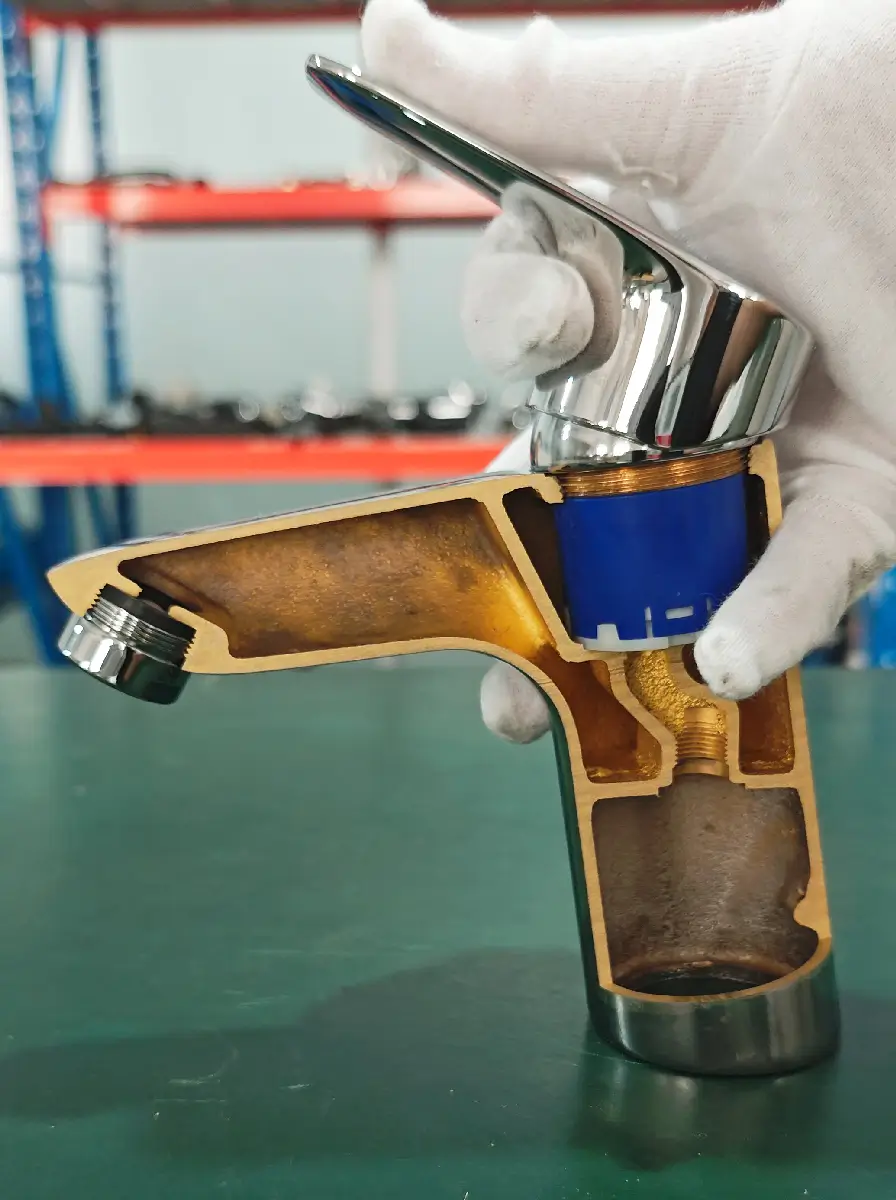
Faucet Anatomy: Basin Mixer Parts — A Closer Look
A basin mixer (also called a lavatory faucet) is the most common type found in bathrooms. Here's a detailed breakdown of each component inside a typical faucet.
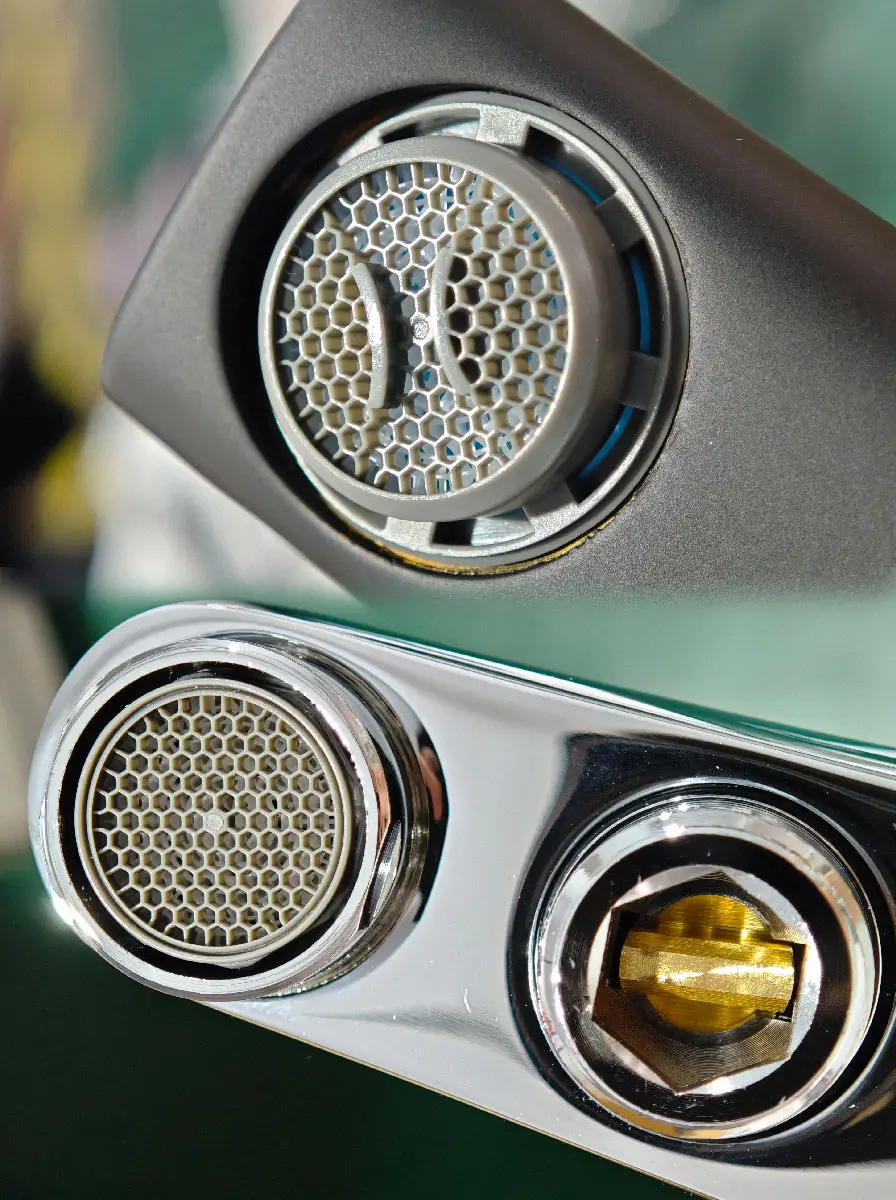
1. Aerator — The Water Saver
Sitting at the tip of the spout, the aerator is a small mesh screen that introduces air into the water stream. This serves three purposes:
- Reduces water consumption — A standard aerator can cut water usage by 30-50% without sacrificing pressure
- Prevents splashing — The air-water mixture flows more smoothly onto the basin surface
- Filters debris — Traps sediment and particles before they exit the spout
A quality aerator should be made of stainless steel mesh, not plastic. Look for aerators rated at 1.2 GPM (gallons per minute) or lower for water efficiency.
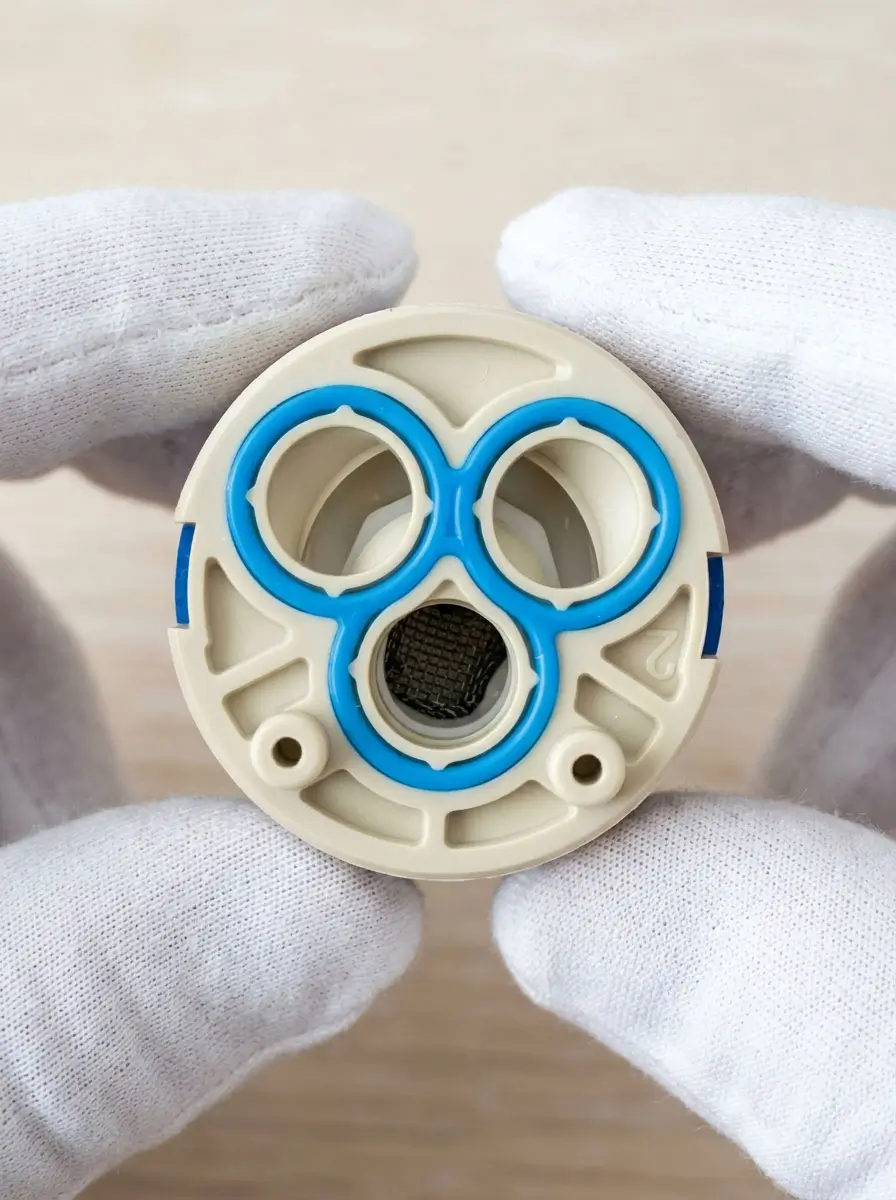
2. Ceramic Cartridge — The Heart of the Faucet
The ceramic cartridge is the single most important component in any mixer tap. It controls:
- Water flow rate — How much water comes out when you lift the handle
- Temperature mixing — How hot and cold water blend together
- Leak prevention — A good cartridge seals completely when the handle is closed
Quality ceramic cartridges use aluminum oxide ceramic discs that are diamond-polished to a mirror finish. These discs slide against each other with virtually zero friction, lasting 500,000+ open/close cycles — that's over 15 years of daily use.
💡 Ceramic vs. Plastic Cartridges
Ceramic cartridges are durable, precise, and handle high water pressure. Plastic cartridges are cheap, prone to wear, and may crack under pressure. Always ask your supplier which type is used before placing an order.
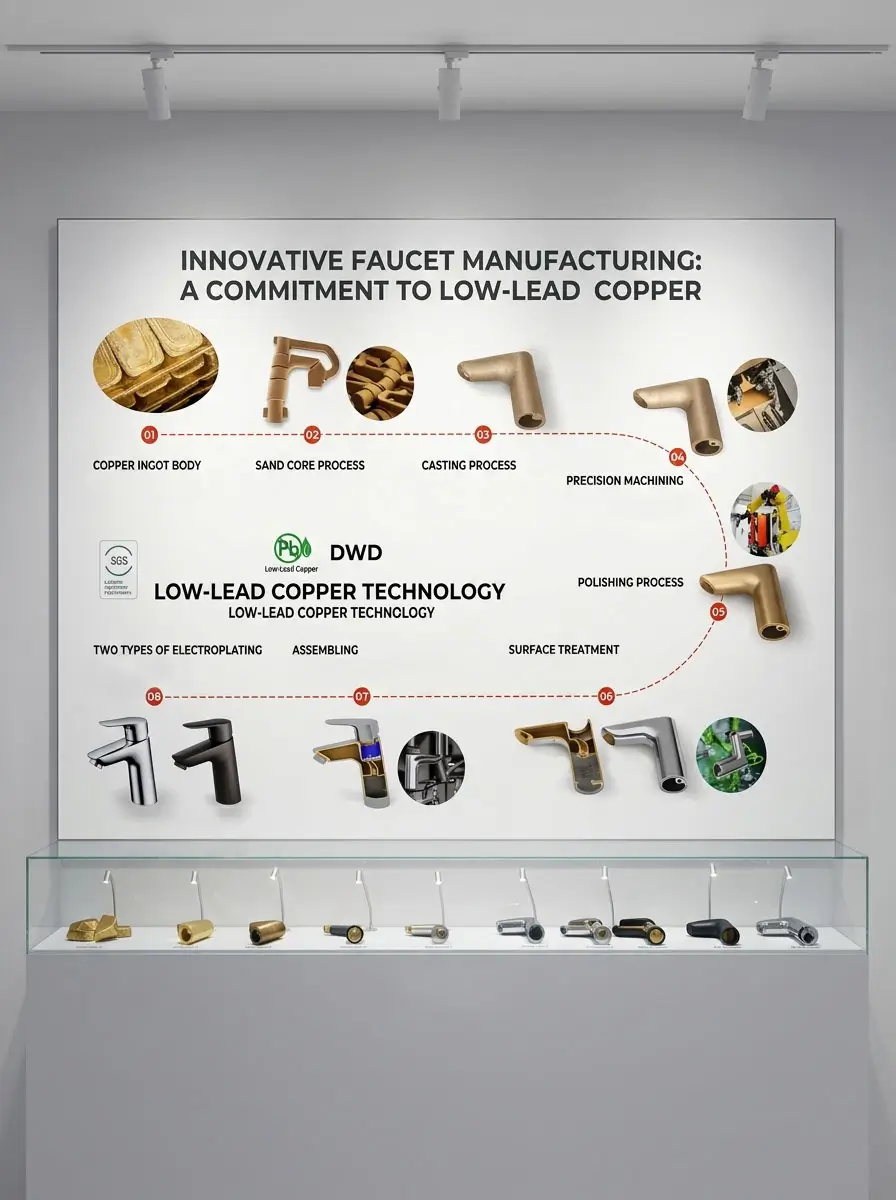
3. Brass Body — Built to Last
The faucet body is the structural backbone. Premium faucets use dezincification-resistant (DZR) brass, which contains:
- 57-60% copper — Provides natural antimicrobial properties and corrosion resistance
- 38-40% zinc — Adds strength and machinability
- Lead-free composition — Meets NSF/ANSI 61 and California AB1953 standards for safe drinking water
A solid brass body weighs significantly more than a zinc alloy or plastic body. When comparing faucets, pick them up — weight is often an indicator of material quality.
4. Flexible Hoses
Modern faucets use braided stainless steel flexible hoses for water supply connections. These hoses must withstand constant water pressure (typically 40-80 PSI), temperature fluctuations, and repeated bending during installation.
Look for hoses with EPDM rubber inner lining and 304 stainless steel braiding for maximum durability.
Kitchen & Bathtub Mixer Anatomy
While basin mixers are relatively simple, kitchen and bathtub mixers have additional components that serve specific functions.
The Diverter Valve
A diverter is a mechanism that switches water flow between the spout and a shower head or hand shower. Common types include:
- Pop-up diverter — Pull up the rod to redirect water to the shower
- Toggle diverter — A switch on the faucet body
- Automatic diverter — Activated by water pressure when the shower is turned on
Check Valves
Check valves prevent hot water from flowing into the cold water line (and vice versa) when there's a pressure difference. This is especially important in systems with water heaters or recirculating pumps.
How to Identify Quality Faucet Parts
Understanding faucet anatomy is essential for quality control. When evaluating a brass mixer tap for your projects or customers, check these key indicators of faucet anatomy quality:
| Component | Quality Indicator | Red Flag |
|---|---|---|
| Cartridge | Ceramic disc, branded (Sedal, Citec) | Plastic cartridge, no brand marking |
| Body | Solid brass, heavy weight, smooth finish | Light weight, zinc alloy, rough casting |
| Aerator | Stainless steel mesh, replaceable | Plastic mesh, permanently attached |
| Hoses | 304 SS braiding, EPDM lining | Thin braiding, PVC lining |
| Finish | Chrome: 5+ layers, Nickel: PVD coating | Thin plating, uneven color |
A Quick Note from Our Factory Floor
After years of manufacturing brass faucets for global brands, we've learned that the difference between a good faucet and a bad one often comes down to a few details that aren't visible from the outside. Here are two things worth paying attention to.
💡 Certifications: It Depends on Your Market
There's no single "must-have" certification that applies everywhere. NSF and AB1953 matter if you're selling in North America, WRAS is key for the UK, WaterMark for Australia, and CE for Europe. The right move is to check what your target market requires, then make sure your supplier can provide those specific certifications. It's not about collecting certificates — it's about having the right ones for where you sell.
💡 Weight: It's About Design, Not a Fixed Number
Weight varies a lot depending on the product design and price point. A premium widespread faucet with a thick brass body will naturally weigh more than an economic single-lever basin mixer. That's normal. What matters is that the weight matches the design — if an economic faucet feels lighter, that's expected. But if a premium, heavy-duty model feels hollow, that's worth questioning. Always compare within the same product category.
Frequently Asked Questions
What is the most important part of faucet anatomy?
The ceramic cartridge. It controls water flow, temperature mixing, and leak prevention. A faucet with a quality ceramic cartridge can last 15-20 years, while a cheap plastic cartridge may fail within 2-3 years.
Why do faucets drip even when turned off?
A dripping faucet is almost always caused by a worn-out ceramic cartridge or degraded rubber O-rings. The ceramic discs inside the cartridge can develop scratches over time, or the rubber seals lose their elasticity, allowing water to pass through.
What does an aerator do in a faucet?
An aerator mixes air into the water stream at the spout tip. This reduces water consumption by 30-50%, prevents splashing, and creates a smoother, more consistent flow. It also filters out small debris and sediment.
Are brass faucets better than stainless steel?
Both materials have advantages. Brass is easier to machine into complex shapes, has natural antimicrobial properties, and is the industry standard for premium faucets. Stainless steel is more scratch-resistant and 100% lead-free. For bathroom applications, lead-free brass is the recommended choice.
How often should faucet cartridges be replaced?
A quality ceramic cartridge typically lasts 15-20 years under normal use. Signs it needs replacement include difficulty turning the handle, inconsistent temperature, or dripping when turned off. Replacement cartridges are inexpensive and can usually be swapped without removing the entire faucet.


