Concrete Basin vs Ceramic Basin: 8 Differences That Matter
Specifying a wash basin for a hotel bathroom, a villa or a project order usually comes down to two candidates: a cast concrete basin or a vitreous china ceramic one.
The price difference is visible on a quotation within seconds. What is harder to see is where that money goes — and which projects genuinely need it.
This guide compares the two materials on weight, substrate, thermal behaviour, staining, repairability, design freedom, lead time and cost: the points that actually decide a specification.
The 30-second answer
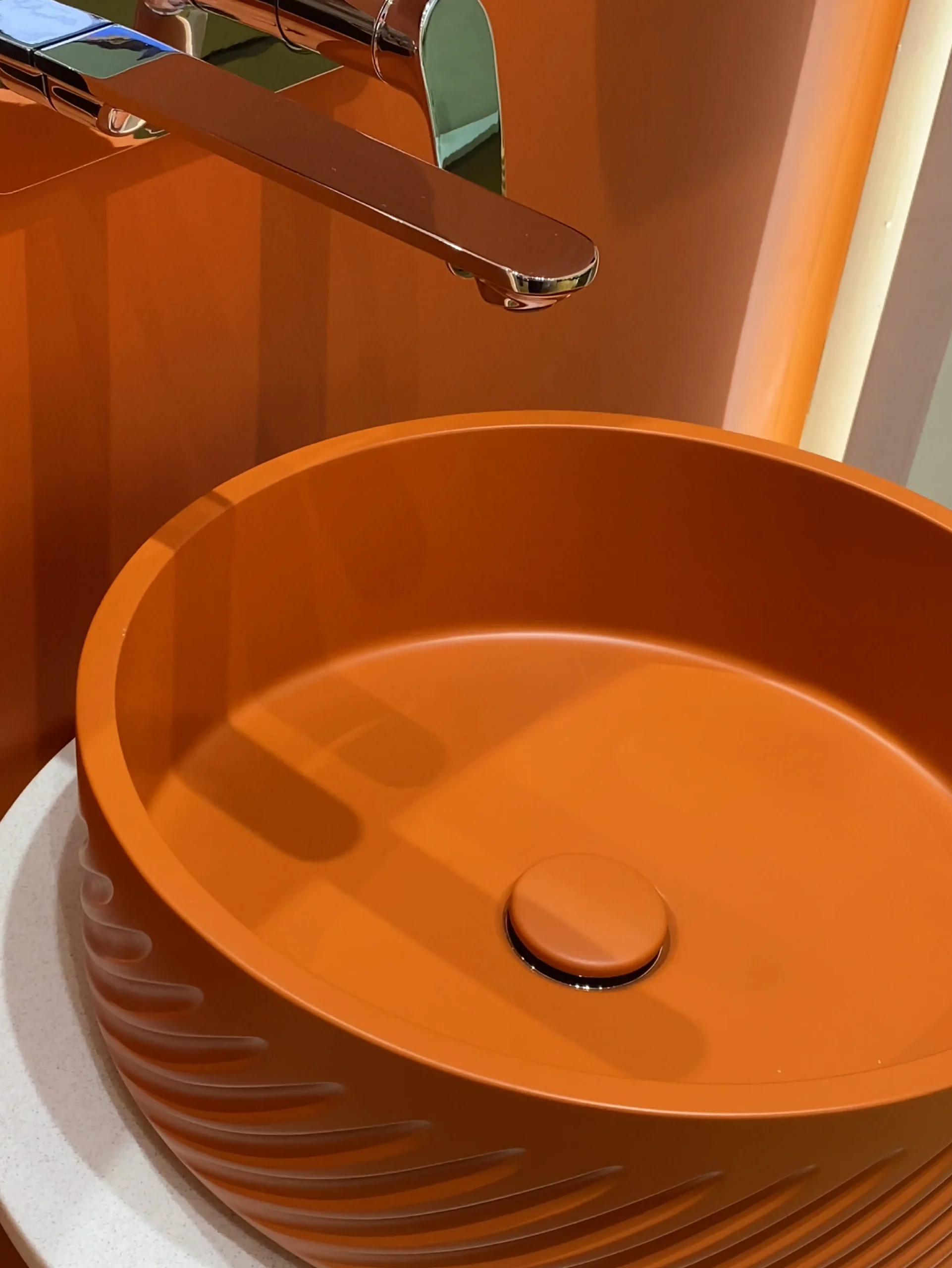
A ceramic basin is cheaper, lighter and fully glazed, which makes it non-porous and easy to clean. A concrete basin is heavier, can be cast in almost any shape, and carries a texture and colour range ceramic moulds cannot produce. Choose concrete when design freedom, an integrated countertop and a premium surface matter — and when the substrate will carry 15–30 kg. Choose ceramic for volume projects, tight budgets and lightweight partitions.
What Is a Concrete Basin?
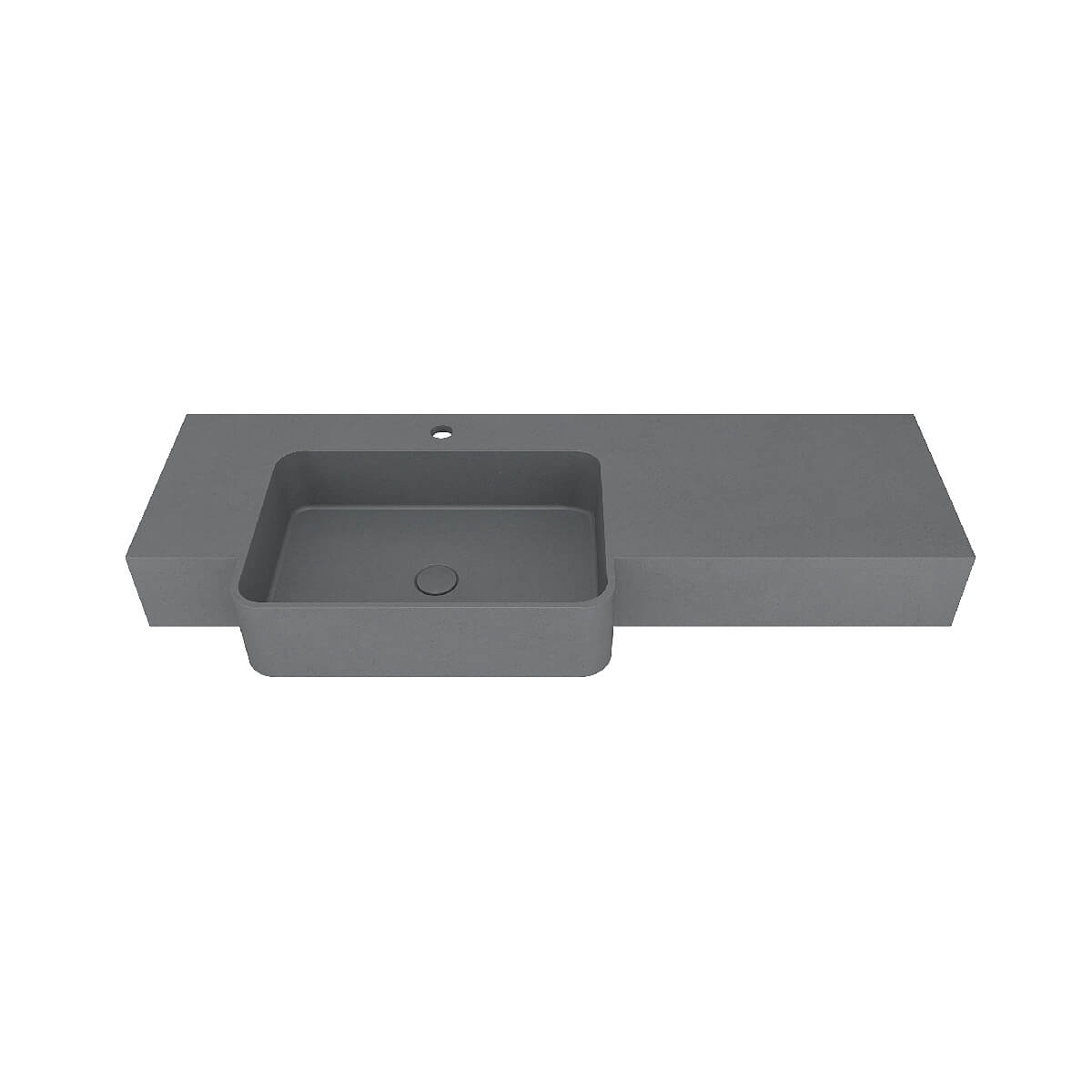
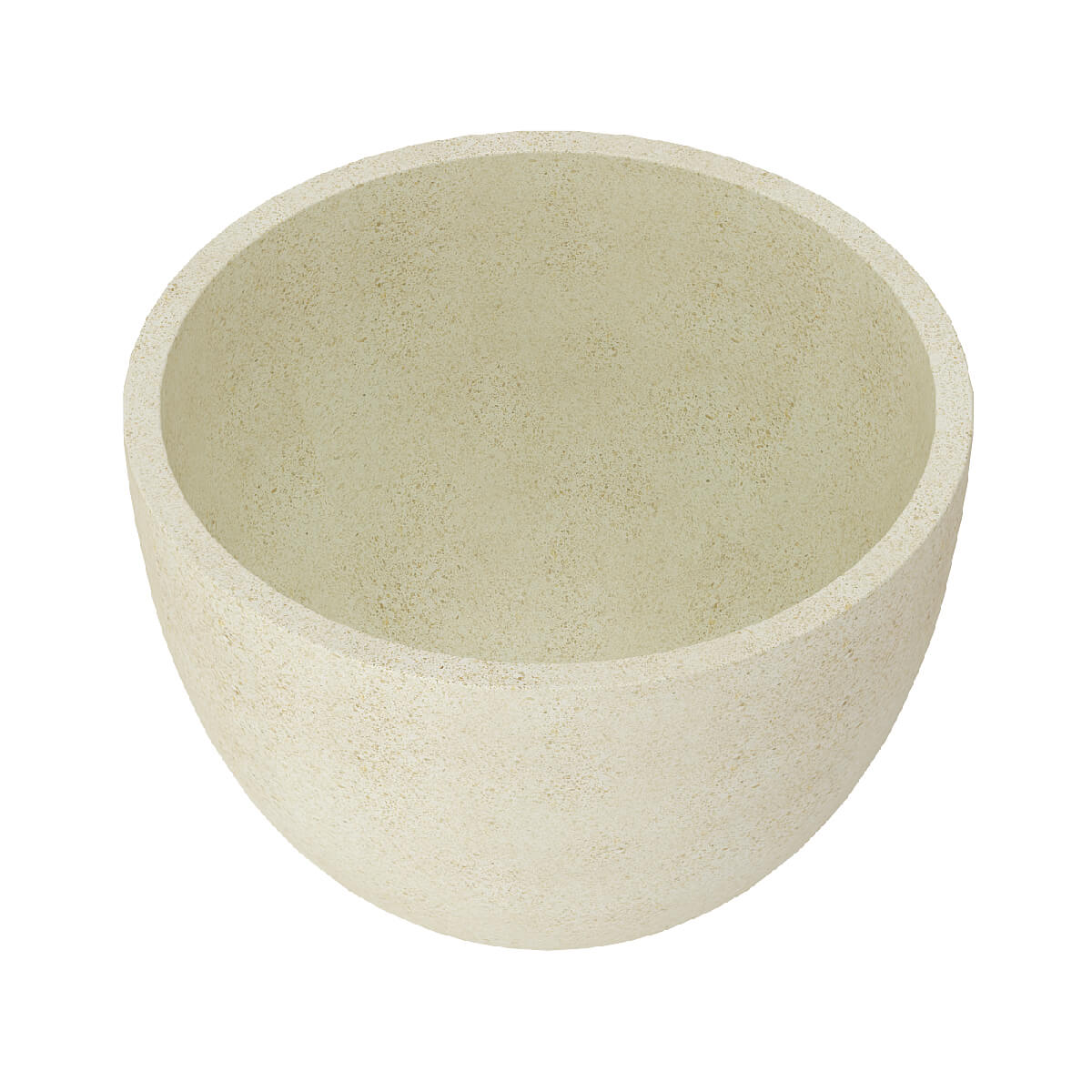
A concrete basin is cast, not moulded under heat. A cement-based mix — often glass-fibre reinforced (GFRC) so the wall section can stay thin without losing strength — is poured or sprayed into a mould, cured for days rather than fired for hours, then ground, finished and sealed. The basin and the countertop are frequently cast as one piece, which removes the joint where water and dirt collect on a separate bowl.
The performance of the finished basin sits almost entirely in the sealer. A penetrating sealer closes the capillary surface, and a topcoat adds a wear layer on top. Well-sealed concrete behaves like a matte stone; poorly sealed concrete absorbs water, oils and coffee, and stains permanently. This is the single question worth asking any concrete supplier: which sealer, and how often does it need renewing.
Why Buyers Are Moving Toward Concrete
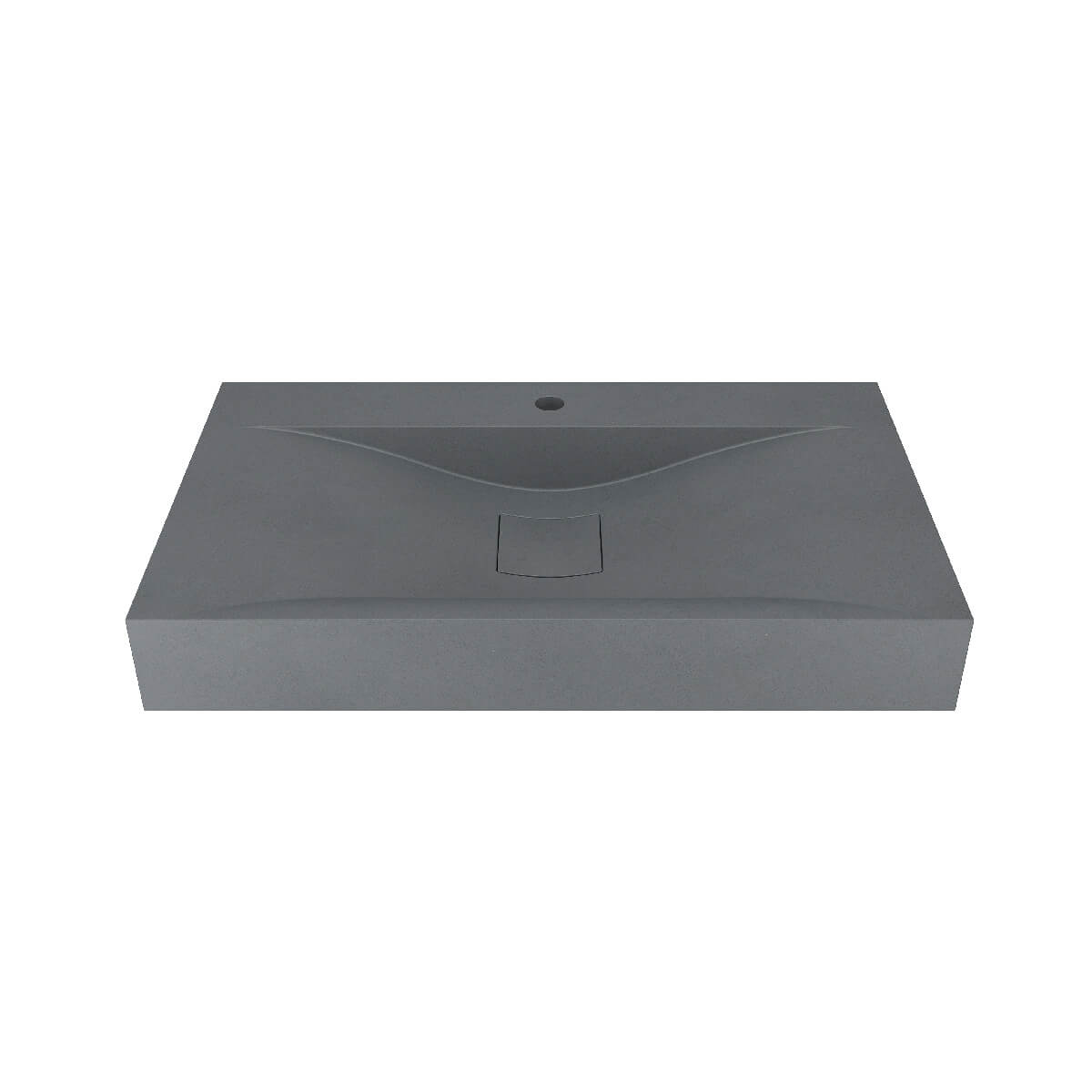
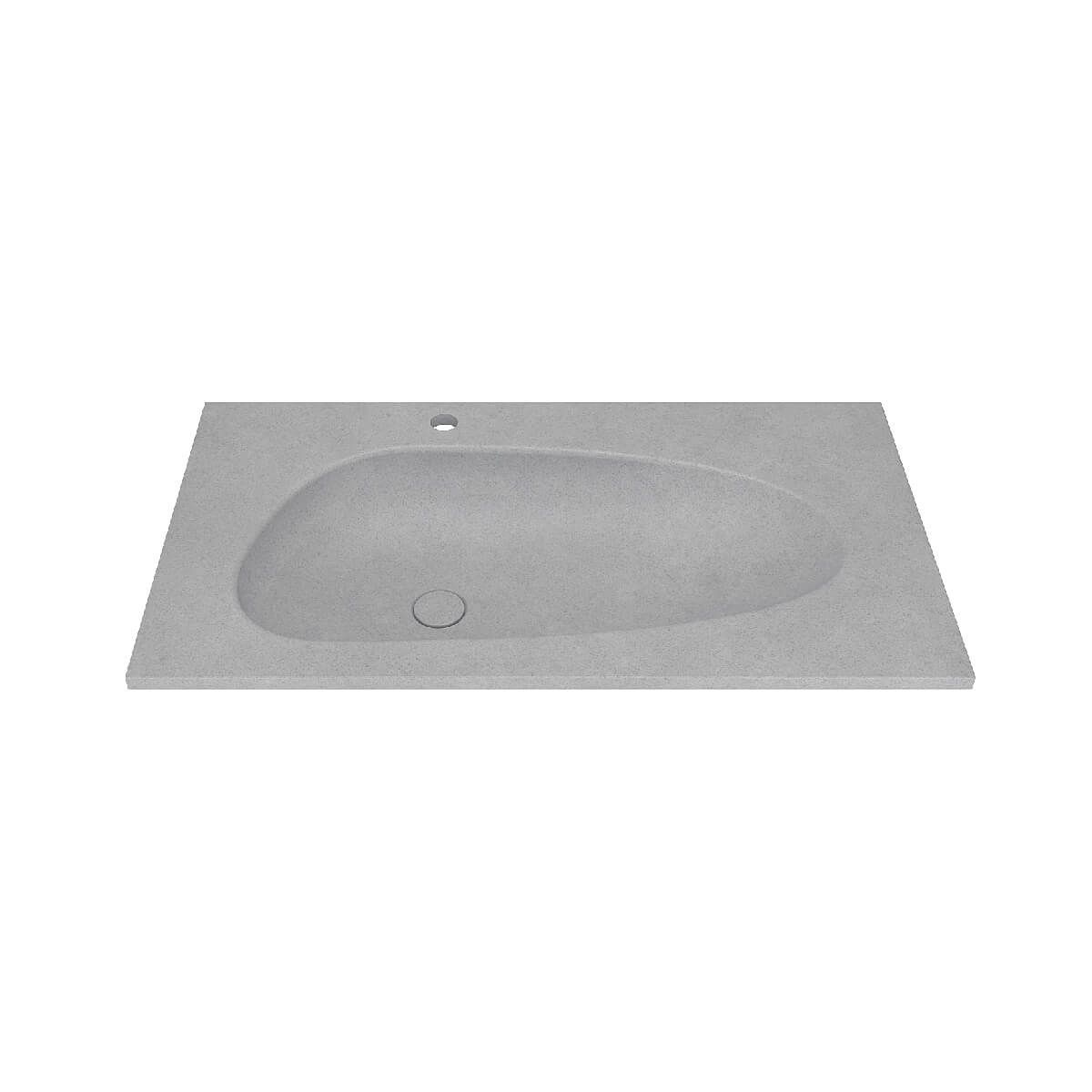
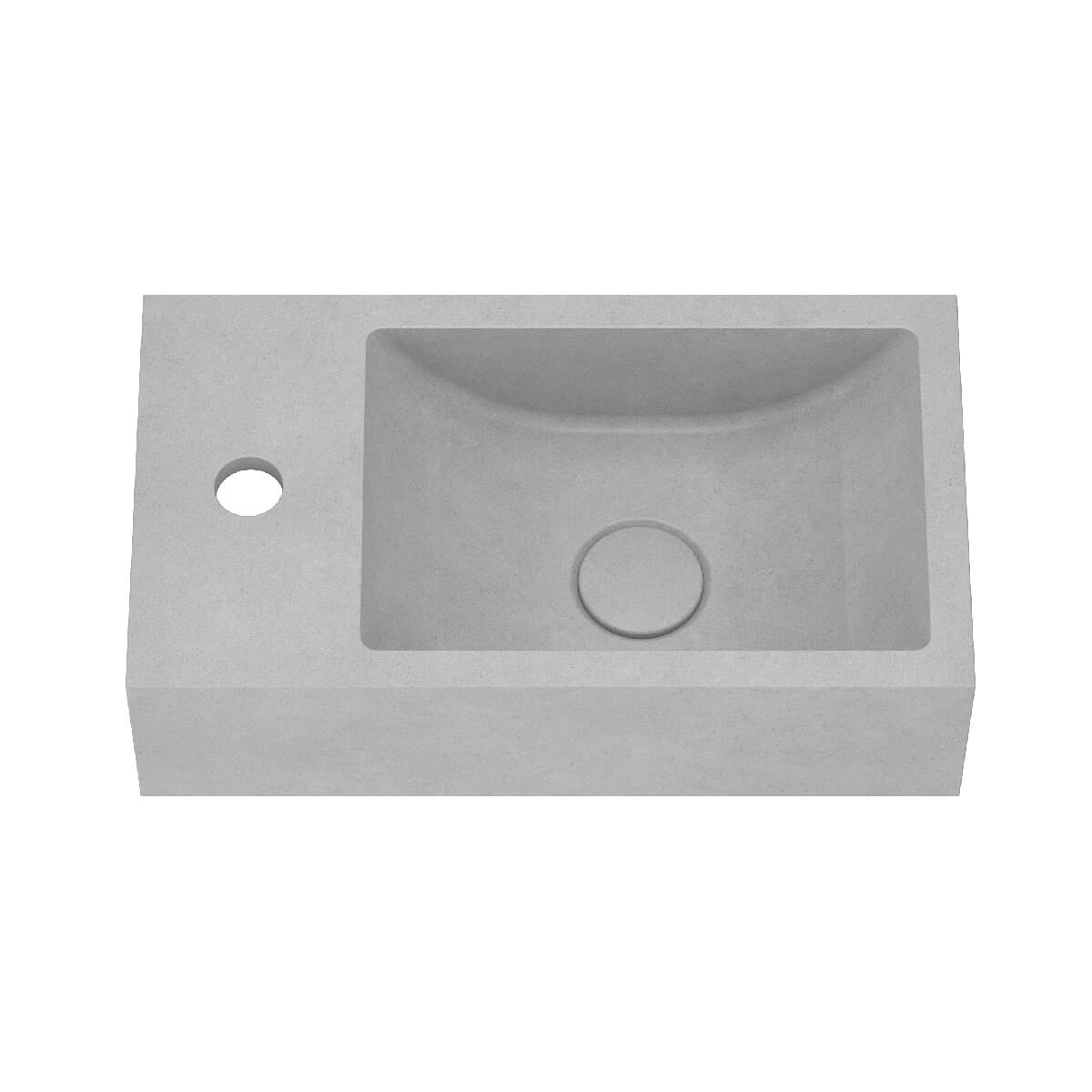
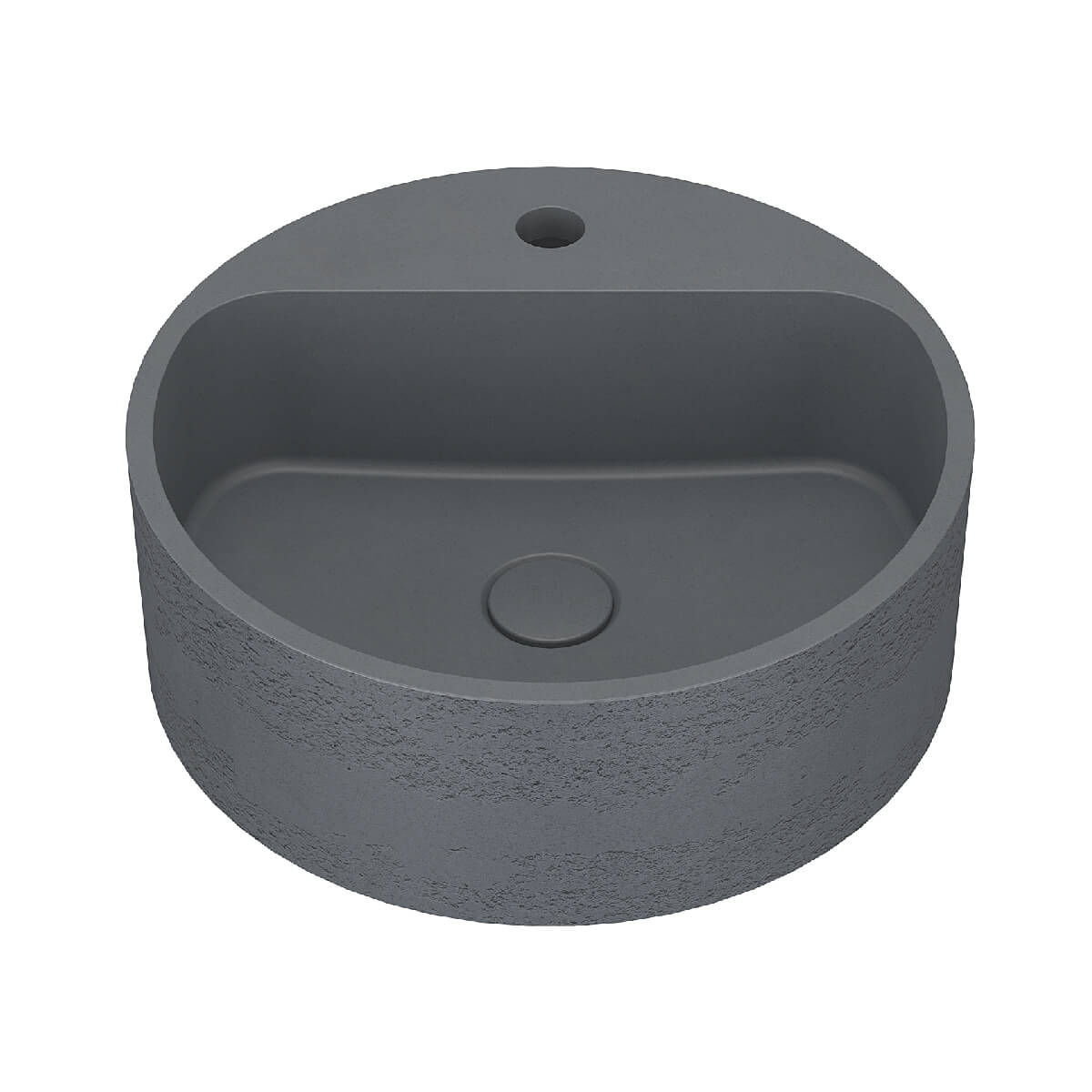
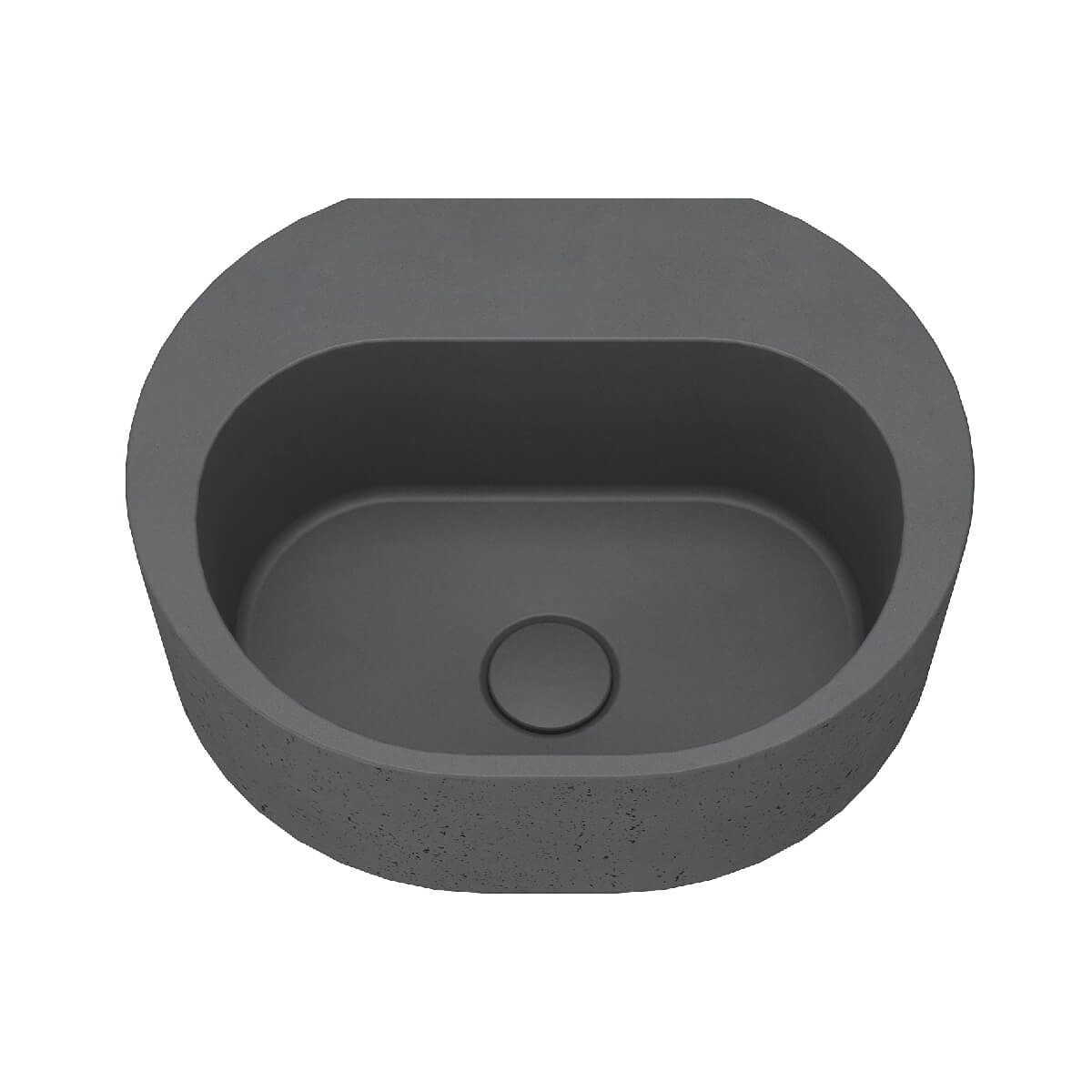
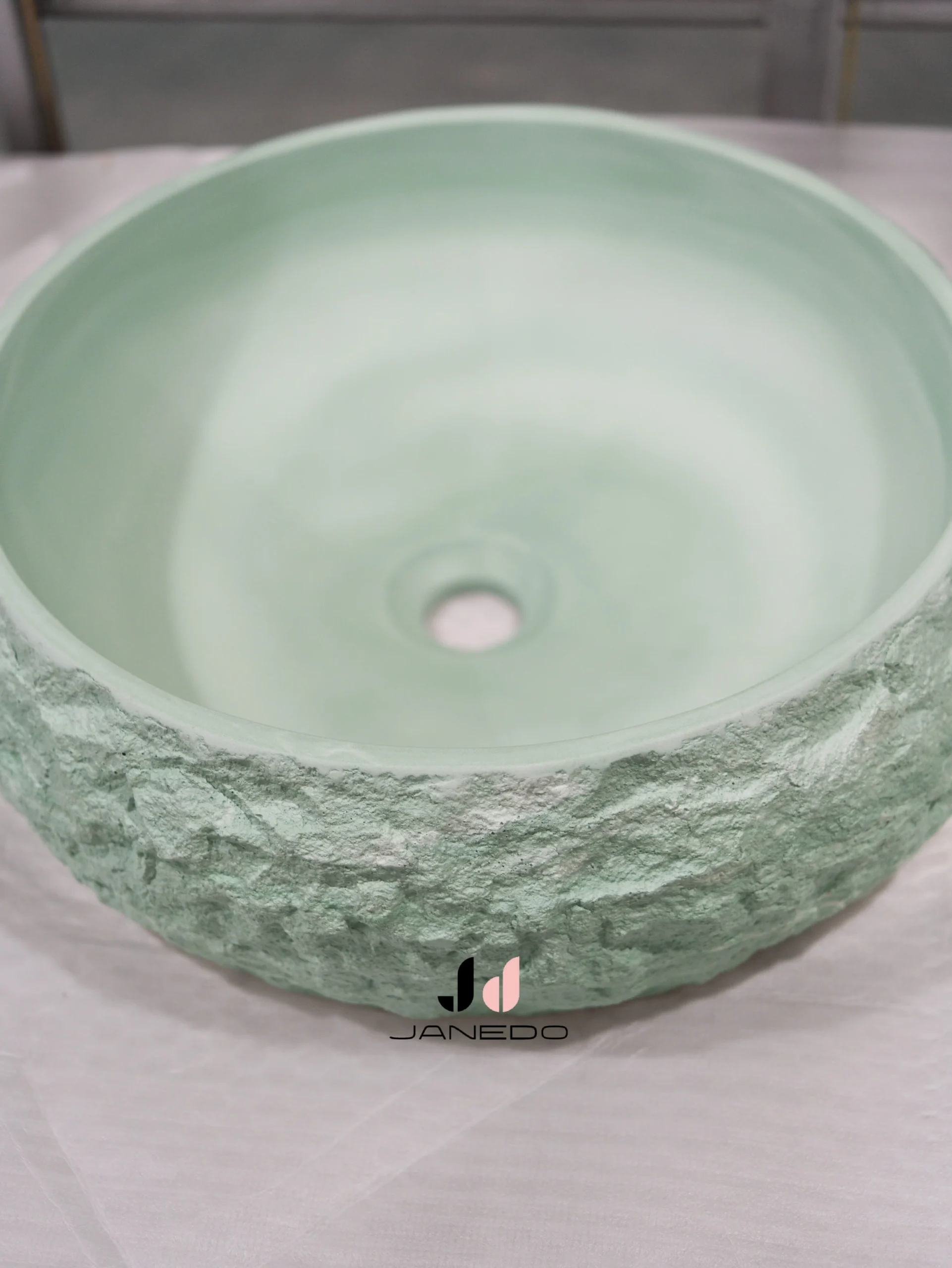
- Shape freedom. A ceramic basin is limited by the steel mould it is pressed in. Concrete can be cast oval, rounded, extra-wide, shallow and trough-shaped, or into a one-piece vanity top with an integrated bowl.
- No joint at the bowl. An integrated cast top removes the silicone line where a countertop basin meets the worktop — the most common place for mould and water damage.
- Finish matching. Matte concrete sits naturally beside matte black, gun metal and brushed gold tapware. Glazed ceramic is glossy by nature and can look mismatched against a matte scheme.
- Repairability. A chip in ceramic exposes the white body underneath and cannot be blended. A chip in concrete can be filled, ground and re-sealed — often invisibly.
- Perceived value. In hospitality and residential projects, concrete reads as architectural and custom, which is frequently the reason it is specified at all.
Concrete Basin vs Ceramic Basin: Side-by-Side
| Criterion | Ceramic basin | Concrete basin |
|---|---|---|
| Construction | Clay fired at high temperature, glazed | Cement composite cast in a mould, cured, sealed |
| Weight (typical) | 8–15 kg for a standard wash basin | 15–30 kg, more for integrated tops |
| Surface | Glazed, non-porous | Sealed, micro-porous, matte |
| Stain resistance | High — glaze resists most staining | Good while sealed; oil and wine need prompt wiping |
| Thermal shock | Can craze or crack under sudden temperature change | Tolerant of temperature change; sealer is the weaker link |
| Chip repair | Permanent — body shows through | Fill, grind and re-seal |
| Design freedom | Limited by mould; standard sizes | Any shape, any size, integrated tops |
| Colour consistency | Uniform piece to piece | Slight tonal variation is inherent, not a defect |
| Cleaning | Tolerates most household cleaners | pH-neutral only — no acid, no bleach, no descaler |
| Maintenance cycle | None beyond cleaning | Re-seal every 1–3 years depending on use |
| Unit cost | Lower | Typically 1.5–2.5× a comparable ceramic basin |
| Best fit | Volume housing, budget projects, light partitions | Hospitality, villa, statement vanity, matte schemes |
Where a Concrete Basin Earns Its Cost
- Hospitality washrooms. A cast top with an integrated bowl and a matte finish reads as a designed bathroom rather than a fitted one.
- Statement vanities. Wide trough basins and double bowls in one piece are straightforward in concrete and expensive or impossible in ceramic.
- Matte and dark tap schemes. Concrete is the surface that makes matte black and gun metal look intentional.
- Custom dimensions. When the joinery is already fixed, a basin cast to the opening avoids a compromise size.
- Renovation of solid masonry. Where the wall or countertop can carry the load, the extra weight is not a constraint.
Where Ceramic Is Still the Better Specification
- Volume and price-led projects. On student housing or a 300-room fit-out, the unit-cost difference decides the specification on its own.
- Lightweight partitions. Drywall and stud partitions often cannot take a 20 kg basin plus water without additional framing.
- Public and heavy-use washrooms. Glazed ceramic tolerates aggressive cleaning regimes that would strip a concrete sealer.
- Fast replacement. A cracked ceramic basin is swapped from stock in an hour; a cast concrete basin is a project item.
- Standard sizes and short lead time. Stock ceramic basins ship immediately; concrete is made to order.
Specification trap
A concrete basin specified onto a hollow partition or a 20 mm worktop with no bracket will fail — usually as a hairline crack running out from the waste hole, months after handover. Confirm the substrate, the fixing method and the access for re-sealing before the order is placed, not after the first complaint.
Weight, Support and Installation
Weight is the point most often missed at quotation stage, because a drawing does not show it. A countertop concrete basin typically lands between 15 and 30 kg before water; an integrated top with a cast bowl can exceed 50 kg. That load has to reach something structural.
| Item | What to confirm |
|---|---|
| Countertop basin | Worktop in stone or solid surface, or a framed timber top; a 20 mm panel alone is not enough |
| Wall-hung basin | Solid masonry, or a steel frame behind the lining; concealed bracket supplied or specified |
| Waste and overflow | 32 mm or 40 mm waste; overflow or no-overflow — cast at the factory, not on site |
| Tap holes | Single-hole or three-hole; deck thickness at the drilling point |
| Sealing access | The joint between basin and worktop must be reachable for re-sealing later |
Finishes: Natural, Terrazzo, Stone Texture, Solid Colour
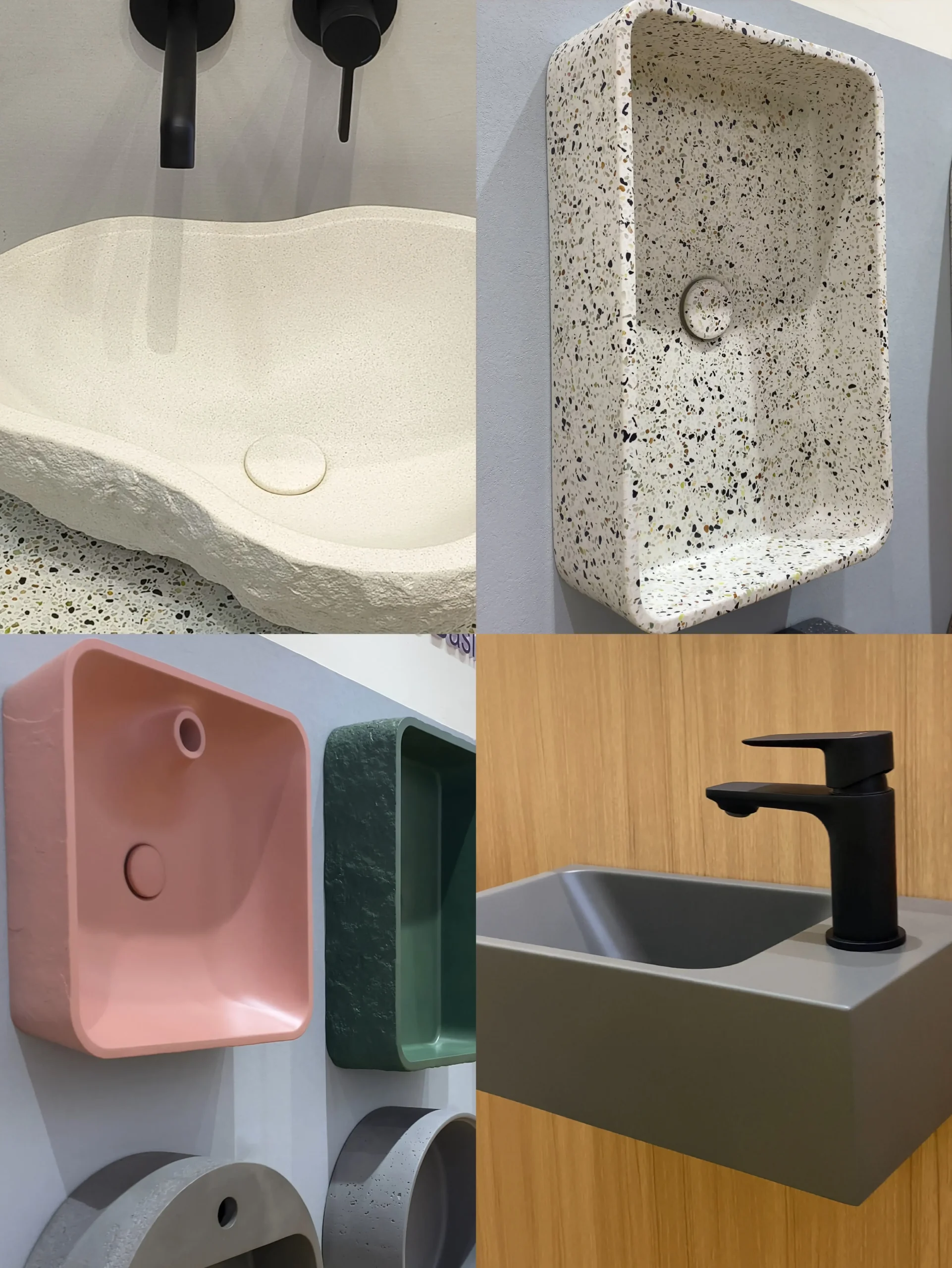
The finish decides how a concrete basin ages visually, and it is the main reason two quotations for the same size can differ by a factor of two.
- Natural concrete. Grey with tonal movement and visible pores. The most honest look, and the least forgiving of stains.
- Terrazzo. Aggregate chips cast into the surface — from fine salt-and-pepper to coarse statement mixes. Hides wear far better than plain grey.
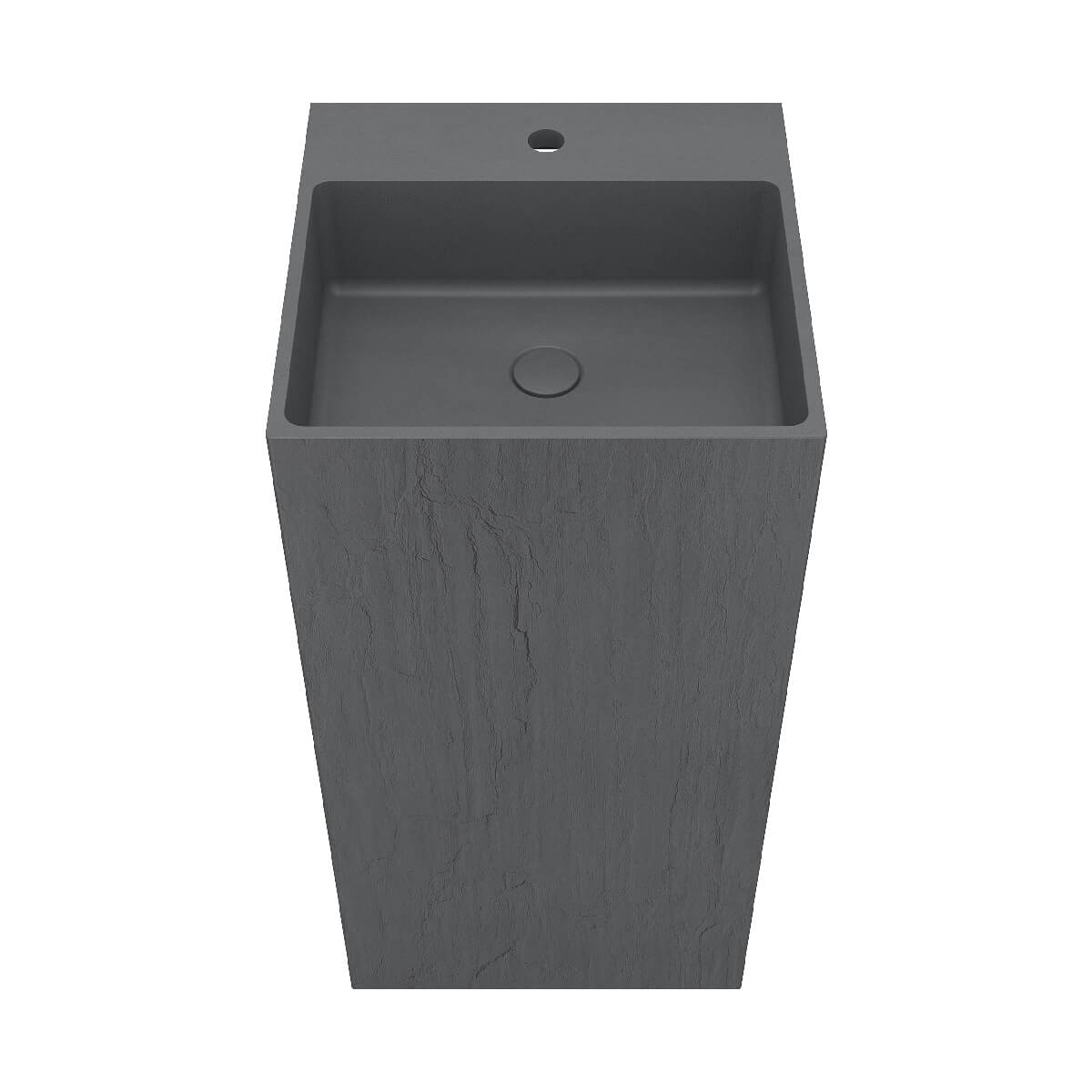
- Stone texture. A surface treated to read as cast stone rather than smooth concrete. We introduced this finish at Canton Fair 2026, and it is documented in a separate article on the stone texture finish.
- Solid colour. Pigmented through the mix, so a chip does not reveal a different colour underneath. The safest choice for coloured projects.
Two practical rules. First, order a physical sample before specifying a project — screens and lighting flatter concrete. Second, fix the sealer specification at the same time as the colour, because a matte sealer and a satin sealer read as different materials on the same mix.
Cost, Lead Time and Order Size
Three cost lines sit behind a concrete basin quotation: the mould, the labour in casting and finishing, and the sealer. Standard shapes amortise the mould across the order; a bespoke shape carries it entirely, which is why a one-off custom basin can cost more than three standard ones.
Lead time follows the curing cycle rather than the assembly line. Janedo’s concrete basin line — countertop, cabinet, pedestal and wall-hung — runs on a 20–30 day production lead time for standard items, with custom shapes quoted separately. Order samples early: a sample has to be cast, cured and sealed before it can be shipped, and that is the step that catches out projects on a fixed handover date. The concrete basin range carries a three-year warranty.
Cleaning, Sealing and Longevity
A sealed concrete basin is easy to live with, provided the cleaning regime matches the sealer. pH-neutral soap and water, a soft cloth, and prompt wiping of oils, coffee and red wine. Acidic descalers, bleach and abrasive pads attack the topcoat — and once the topcoat is eaten through, staining becomes permanent rather than surface-level.
Re-sealing is the maintenance item to schedule. In a family bathroom, every two to three years is realistic; in a hotel or a commercial washroom with heavy cleaning, expect a shorter interval. Our step-by-step concrete basin care and cleaning guide covers the routine in detail.
How Janedo Casts Concrete Basins
Janedo has manufactured sanitary ware since 1997, with more than 25 years of export experience. Machining, polishing, casting and assembly run across an 18,000 m² plant and a second 8,800 m² facility, with production managed through ERP and TPS and a quality system certified to ISO 9001, ISO 14001 and OHSAS 18001, alongside BSCI, Sedex and CNAS recognition.
Concrete basins are cast, cured, ground and sealed in-house, and every unit is checked before packing. The process is documented step by step in concrete basin manufacturing: 7 steps from mould to sealer, and the export packing method — foam versus honeycomb — is covered in our packaging guide.
You can see the current concrete basin range for shapes, sizes and finishes.

Frequently Asked Questions
Is a concrete basin suitable for a family bathroom?
Yes. The limitation is substrate and maintenance, not the material: the basin needs a countertop or wall that carries 15–30 kg, and the sealer needs renewing every few years. Both are manageable in a domestic installation.
Do concrete basins stain easily?
A properly sealed basin resists water and soap without marking. Oils, red wine and coffee can stain if left, and acidic cleaners will damage the sealer over time. Wipe spills promptly and clean with pH-neutral products.
How heavy is a concrete basin?
A countertop concrete basin is typically 15–30 kg; an integrated vanity top with a cast bowl can be considerably heavier. Confirm the figure for the specific model before designing the support.
Can a concrete basin be repaired if it chips?
Usually yes. Chips and shallow scratches can be filled, ground back and re-sealed, which is one advantage over glazed ceramic, where a chip exposes the body permanently.
Does a concrete basin need re-sealing?
Yes. Sealer is a wear layer. In a domestic bathroom, plan on every two to three years; in commercial or heavy-cleaning environments, more frequently. Confirm the recommended sealer type with the factory at order stage.
Is a concrete basin more expensive than ceramic?
Typically 1.5–2.5 times a comparable ceramic basin before custom mould costs. The gap narrows on larger and integrated pieces, where ceramic cannot compete on size or shape at all.
Next step
Send us the basin size, mounting type and target market, and we will confirm the shape, finish and sealer specification — and whether the substrate detail in your drawings will carry the load.
Reference: Washbasin — Wikipedia and Vitreous china — Wikipedia.