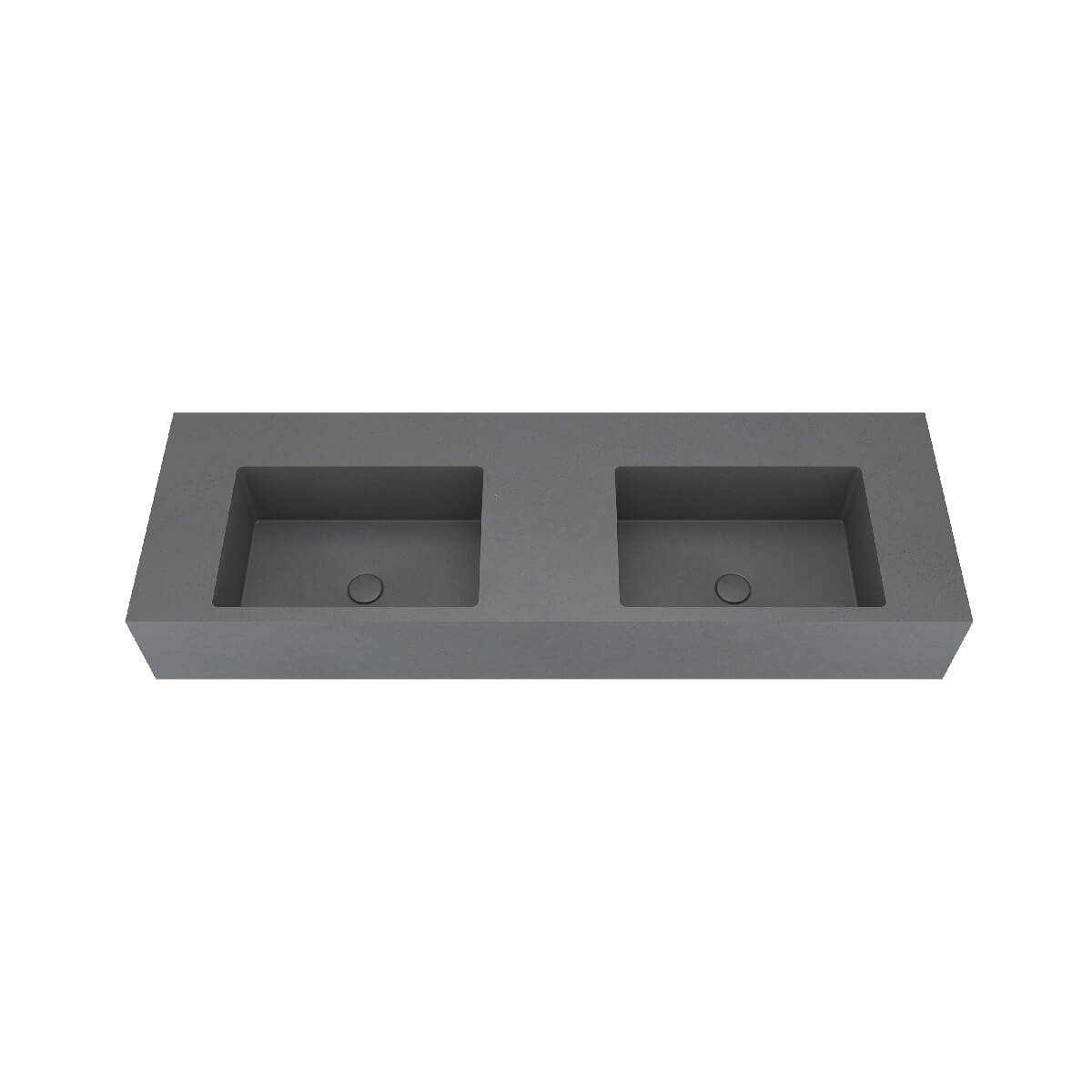
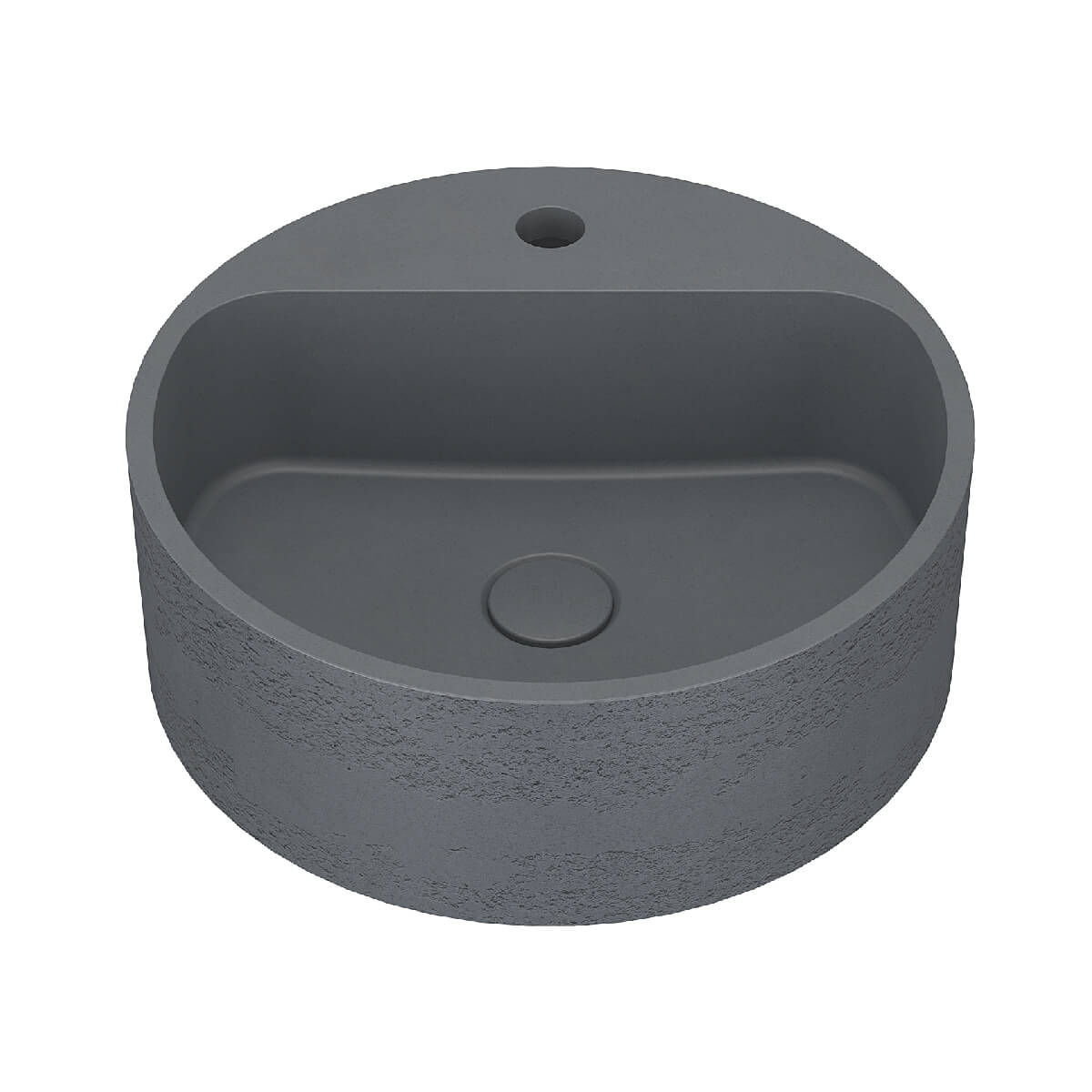
How Concrete Washbasins Are Made: Inside Our Manufacturing Process
Every concrete washbasin starts as cement, aggregate, and water — and only becomes a finished product after a multi-week journey of casting, curing, grinding, and sealing. Here's a look at concrete basin manufacturing at the Janedo factory, and why each step matters for the basin you eventually install.
Raw Materials: Where Durability Begins
Good concrete basin manufacturing starts before the first mould is filled. The raw materials chosen at this stage determine the basin's strength, water resistance, colour stability, and surface feel:
- Cement — Selected for both strength development and colour consistency, so batches stay visually uniform
- Fine aggregates — Sand and quartz powder fill the matrix, influence surface texture, and reduce the risk of cracking
- Additives — Pigments for integral (through-body) colour, waterproofing agents, and reinforcing fibres are dosed according to each model's design requirements
Ratios are weighed precisely for every batch. In concrete work, the mix design isn't a detail — it is the product.
Step 1: Mould Development
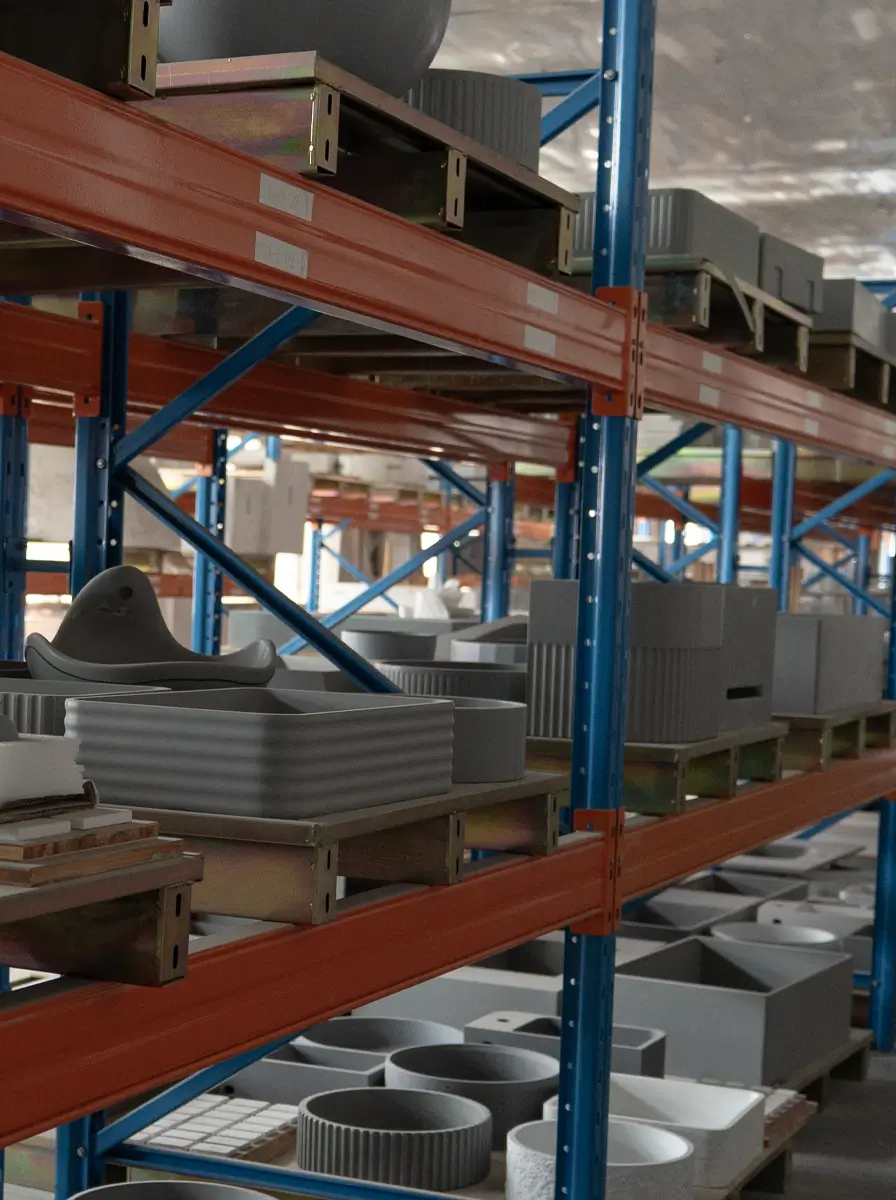
Moulds are developed in-house in our mould workshop, part of our second factory (8,800 m²) together with casting and concrete production. Depending on the model, moulds are made from silicone, fiberglass, or rigid plastic. Mould precision directly controls edge definition, wall thickness, and dimensional accuracy — and proper mould maintenance keeps batch-to-batch consistency high across production runs.
Step 2: Mixing and Casting
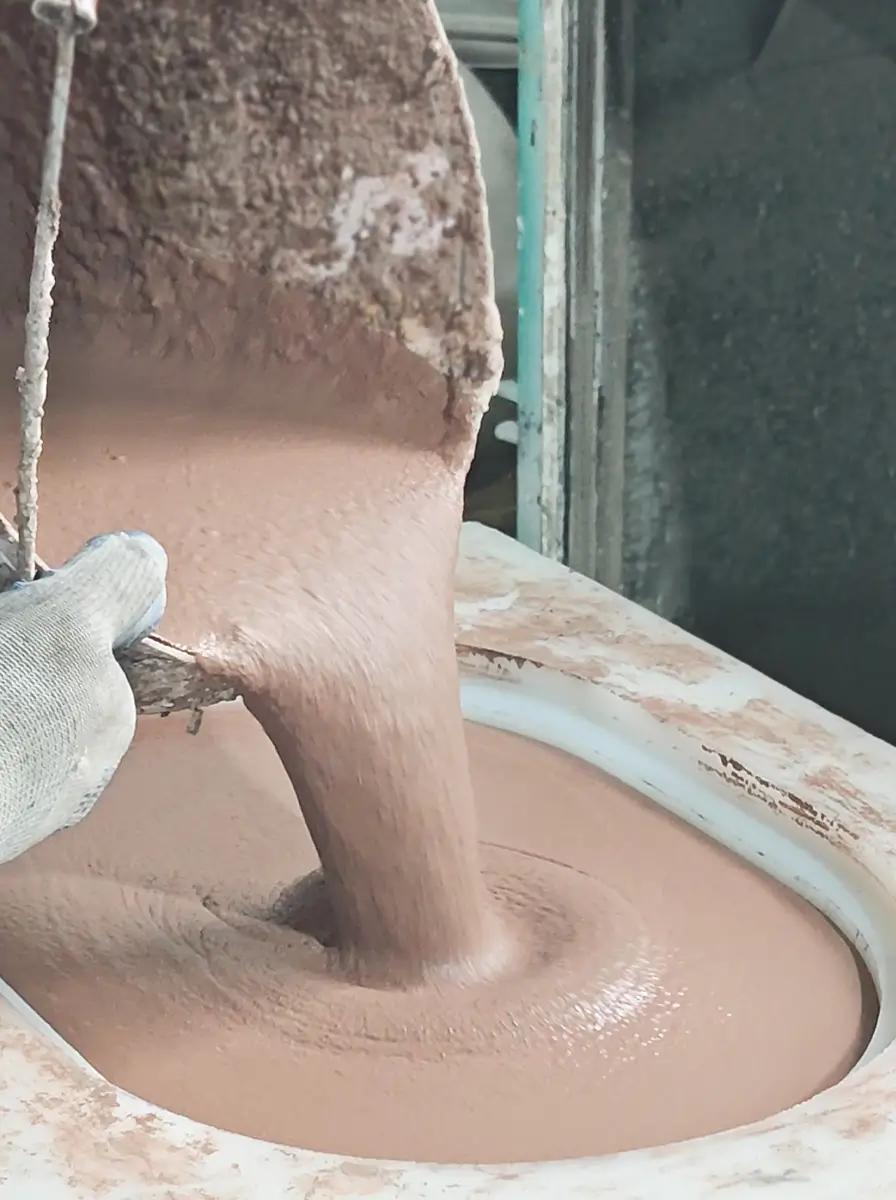
Each batch is mixed to a uniform consistency, then cast into the mould. Vibration during casting releases trapped air bubbles and compacts the matrix — the two things that separate a dense, water-resistant basin from a porous one. Complex shapes such as above-counter bowls and integrated designs are cast with extra attention to corners and thin sections.
Step 3: Demoulding
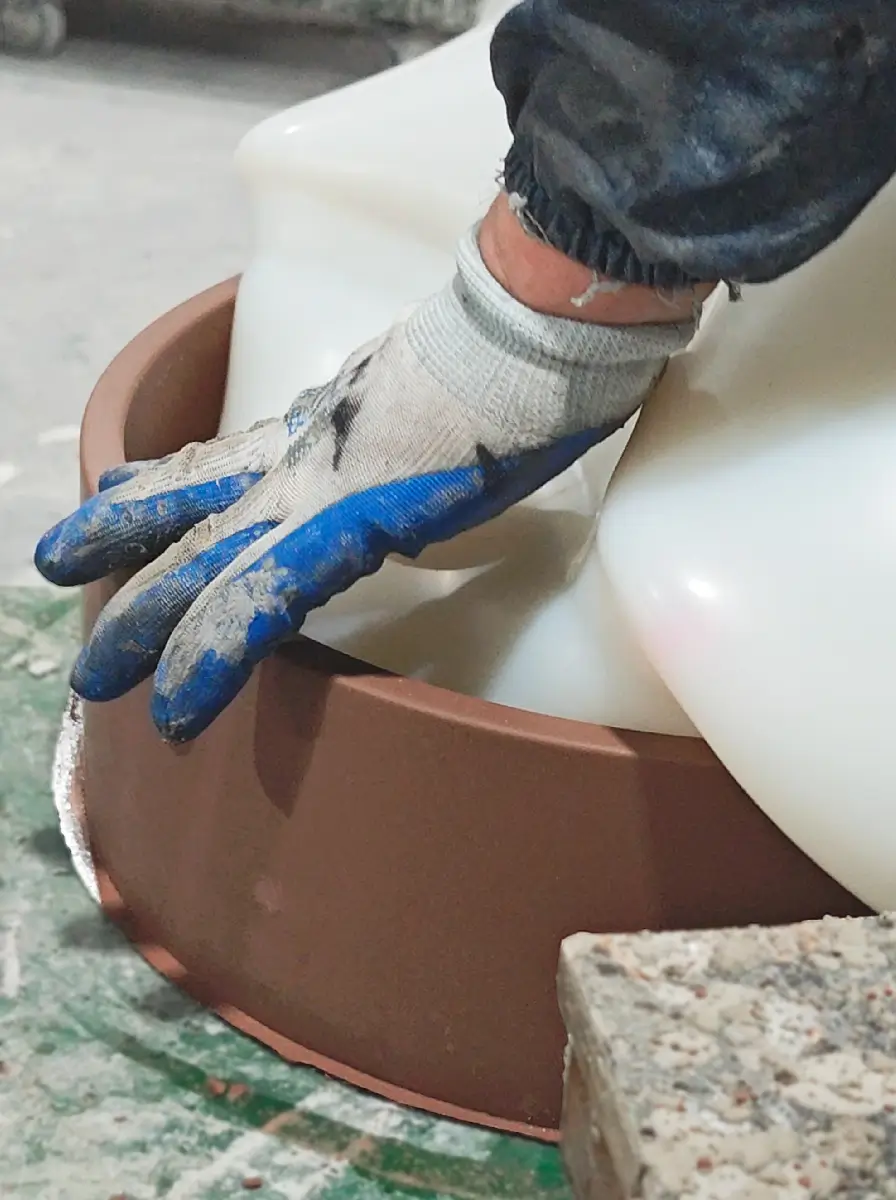
After the concrete has gained enough initial strength, each piece is carefully demoulded. This is a delicate moment: the basin is solid but still young, and edges and rims are protected during handling. What comes out of the mould is a raw casting — strong enough to work with, but far from finished.
Step 4: Wet Grinding and Trimming
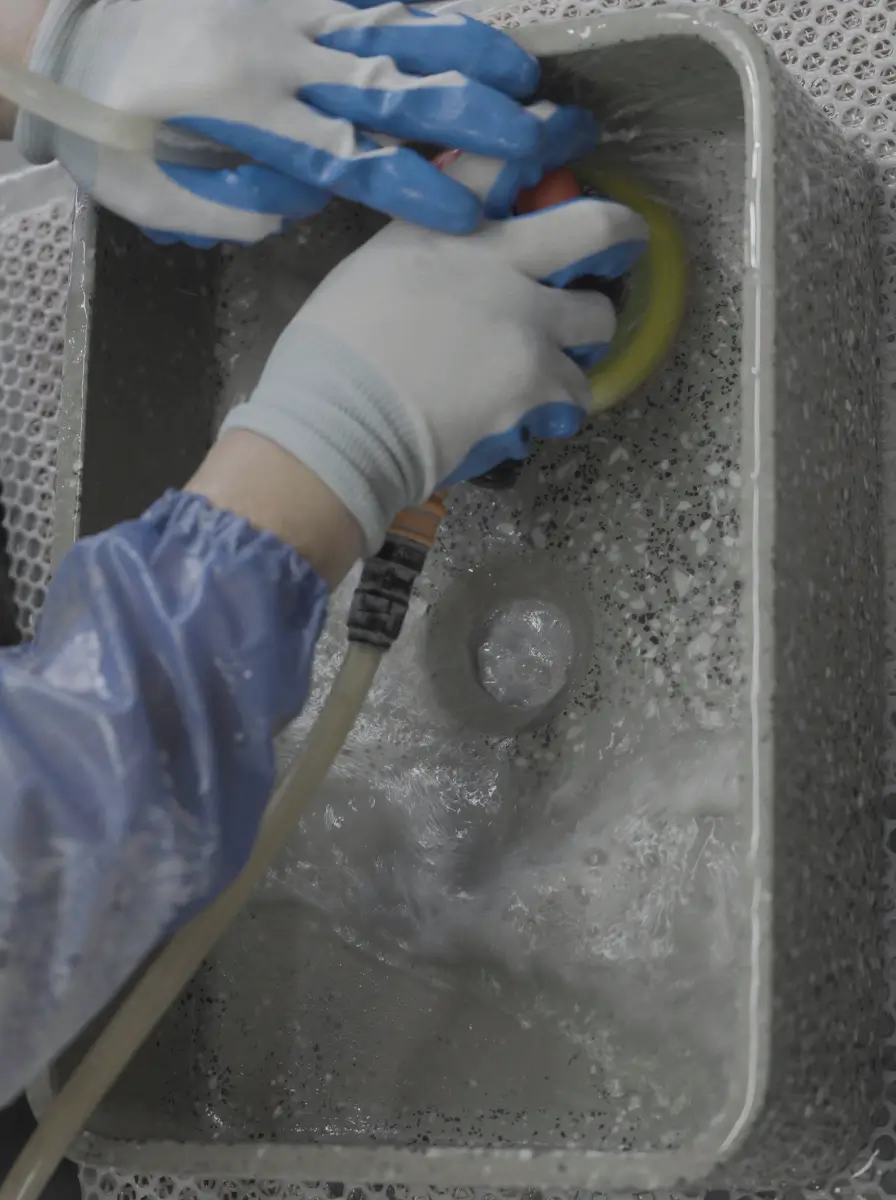
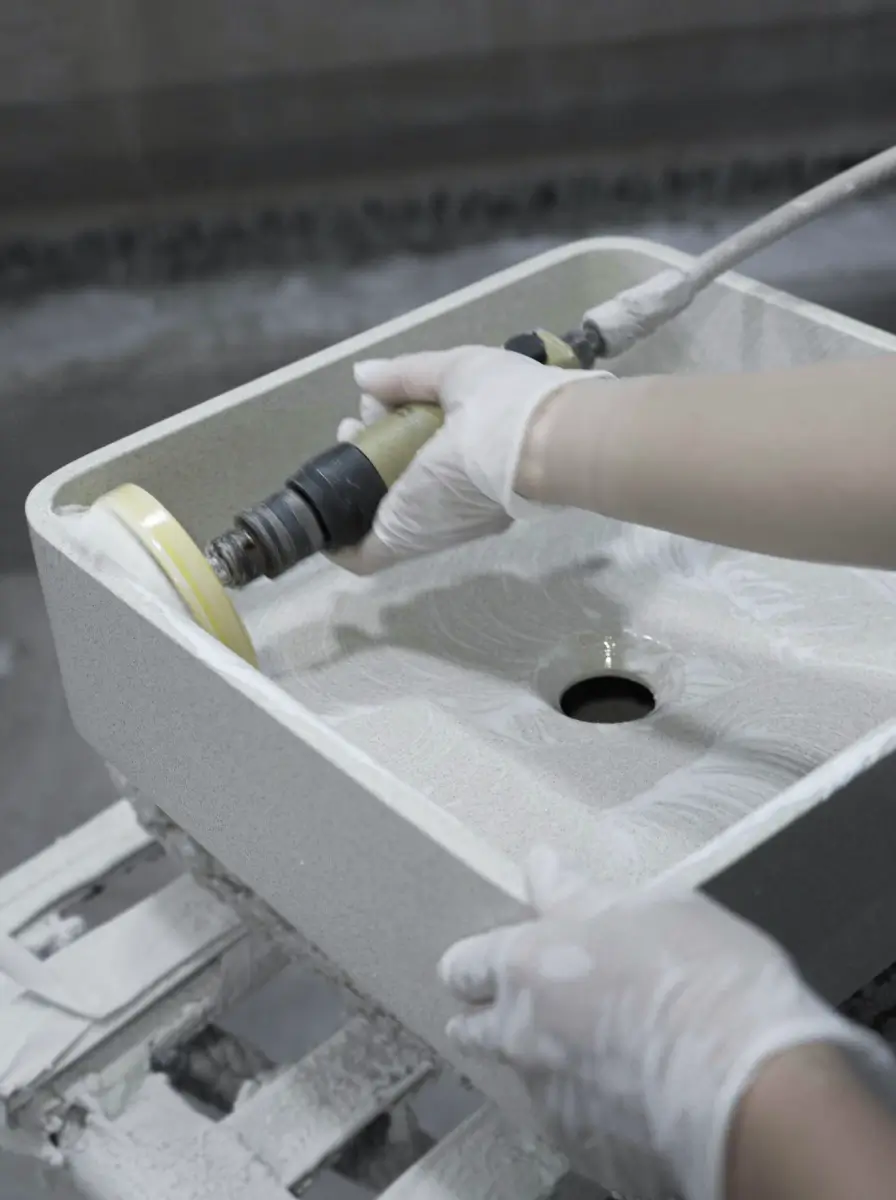
The casting now goes through wet grinding and manual trimming. Edges are cleaned of seam lines, pinholes are patched, and the surface is ground progressively through different grits — from an open, textured finish to a smooth, silky one, depending on the model. This stage is where a raw casting starts to look like a designed product.
Step 5: Wet Curing — The Stage That Defines Concrete
Here's where concrete basin manufacturing differs most from ceramic or artificial stone: curing. After grinding, basins undergo a controlled wet-curing stage lasting 7 to 28 days, depending on the mix and model, under managed temperature and humidity.
During curing, the hydration chemistry of cement continues deep inside the material — the concrete keeps gaining strength and density long after it leaves the mould. Skipping or shortening this stage is the fastest way to produce a basin that looks fine on day one but fails in daily use. We don't rush it.
Step 6: Sealing and Surface Protection
Once cured and dried, each basin receives its protective sealer — the single most important step for waterproofing and everyday stain protection. Depending on the model, we use two complementary types of sealer:
- Penetrating sealer — Absorbs into the concrete matrix and seals the pores from within, without changing the natural look of the surface
- Film-forming sealer — Forms a protective top layer that adds gloss or matt finish and an extra barrier against water and stains
Sealer is spray-applied in one or more passes under controlled conditions, with the number of coats matched to the model and its intended use. The principle is simple: concrete is porous by nature, and the sealer closes those pores so water, coffee, wine, and toothpaste sit on the surface instead of soaking in — you simply wipe them away. Colours, whether integral pigments or surface finishes such as antique effects, are locked in at this stage too.
How do we know it works? Every sealed basin passes a water test at the end of the line — filled and held to confirm zero leakage. The sealer is what makes daily care so simple; for long-term maintenance after installation, see our care instructions for concrete washbasins.
Step 7: Quality Control and Certifications
Quality control runs in two layers throughout concrete basin manufacturing:
- IPQC (In-Process Quality Control) — Checks at every production stage: mix consistency before casting, compaction and demoulding condition, grinding quality, curing conditions, and sealer application. Problems are caught on the line, not after packing.
- FQC (Final Quality Control) — Every finished basin is inspected before it can ship: visual check (cracks, pinholes, colour variation, sealer uniformity), dimensional check against the drawing, and a water test (filled and held to verify no leakage; drainage checked on applicable models).
These checks run under our ISO 9001 quality management system, applied uniformly across both Janedo factories. Depending on the product and destination market, we also hold certifications and third-party test reports that European and global buyers commonly require:
| Certification / Report | What It Means for Buyers |
|---|---|
| ISO 9001 | Certified quality management system — consistent processes across the factory |
| CE | Conformity with applicable EU requirements for the relevant product regulations |
| SGS report | Independent third-party testing of materials and performance by SGS |
| CUPC | Plumbing certification recognised for the US and Canadian markets |
| WTMK (WaterMark) | Plumbing certification recognised for the Australian market |
Need a specific test report for your market? Ask when you request a quote — we'll confirm which certifications apply to your chosen models.
Packing for the Journey
Finished basins are packed with foam or honeycomb board inside 5- or 7-layer cartons, with wooden crate and pallet options for air freight and long routes. Full details are in our concrete basin packaging guide.
Concrete Basin Manufacturing at a Glance
| Stage | What Happens | Why It Matters |
|---|---|---|
| Mould development | In-house silicone / fiberglass moulds | Shape accuracy and batch consistency |
| Mixing & casting | Precise ratios, vibration-compacted pour | Density, strength, fewer air pockets |
| Demoulding | Careful removal of young castings | Protects edges before finishing |
| Wet grinding & trimming | Progressive grits, pinhole patching | Surface quality and final feel |
| Wet curing | 7-28 days, controlled humidity | Final strength and durability |
| Sealing | Penetrating & film-forming sealer, spray-applied | Waterproofing and stain resistance |
| Quality control | IPQC on the line, FQC + water test before packing | Only leak-free basins ship |
Frequently Asked Questions
How long does it take to make a concrete washbasin?
The process spans several days per batch: moulding and casting, initial set before demoulding, wet grinding and trimming, a wet-curing stage of 7 to 28 days, drying, sealing, and final inspection. The curing stage is deliberately unhurried — it determines the basin's final strength.
Are concrete washbasins waterproof?
Yes. Every basin is sealed with a protective sealer during manufacturing, and each one passes a water test (filled and held to check for leaks) before packing. With basic care and periodic waxing, the basin stays water- and stain-resistant in daily use.
Why is wet curing so important?
Curing is where concrete gains its real strength. After demoulding, the material is solid but continues to hydrate for 7 to 28 days under controlled humidity, depending on the mix and model. This stage is what sets properly made concrete basins apart from alternatives like artificial stone — it's the difference between a basin that lasts and one that degrades early.
Can concrete basins be customised in colour and shape?
Yes. Moulds are developed in-house, so shapes are driven by the model design, and colours can be integrated as pigments during mixing or applied as surface finishes. Share your target design and we'll confirm what's achievable for your project.
How is quality controlled before shipping?
Quality runs on two levels: IPQC (in-process) checks at every production stage, then FQC (final) inspection of each finished basin — visual check, dimensional check against the drawing, and a water test for leaks. The process runs under our ISO 9001 quality management system, and additional certifications and test reports (CE, SGS, CUPC, WTMK) are available depending on the model and market.
Will my basin look exactly like the photos?
Concrete is a handcrafted material, so subtle variations in texture and tone are natural — each basin is unique. Browse the full concrete basin collection, and for care, cleaning, and what to expect over time, see our concrete washbasin care guide.